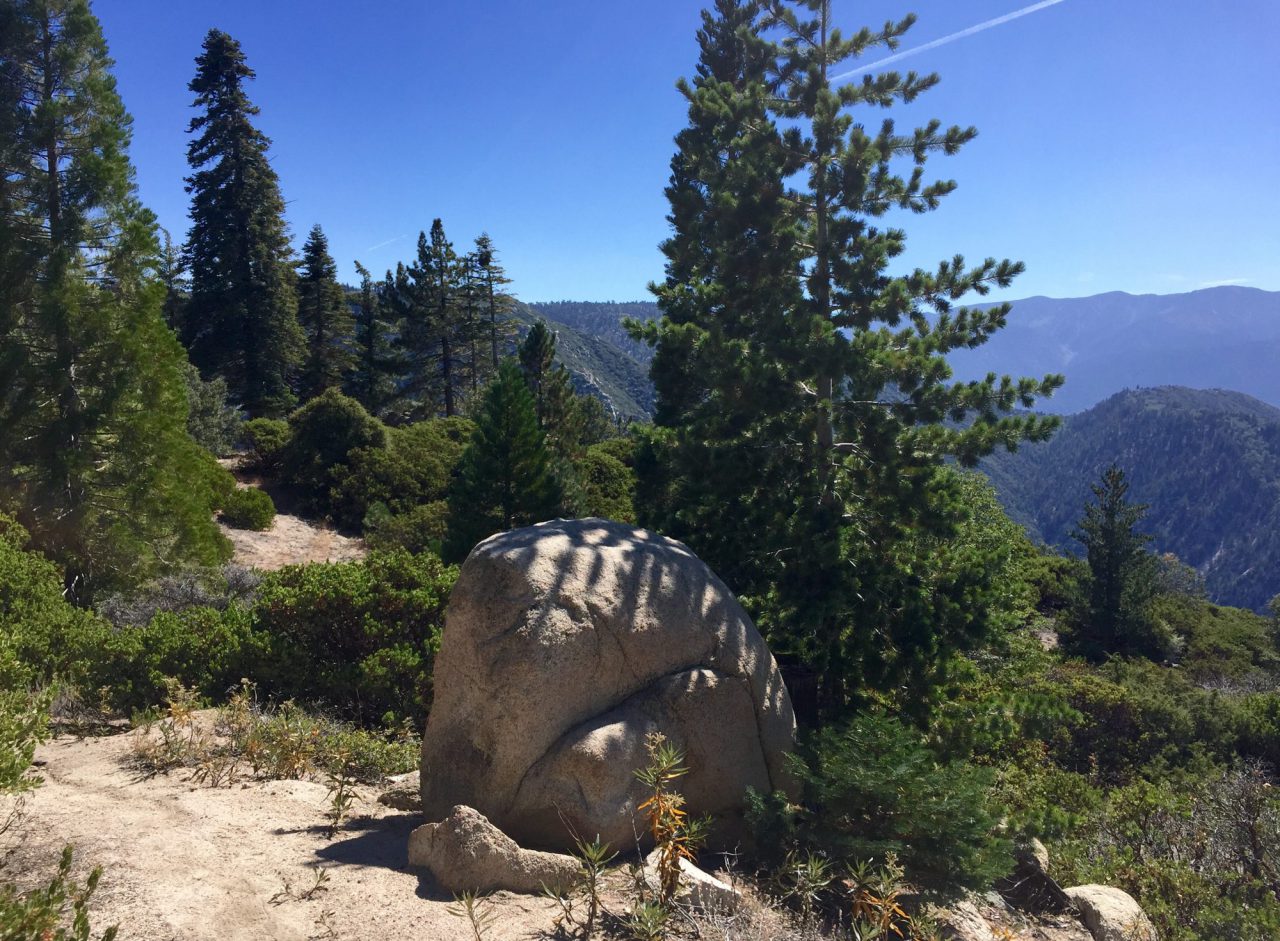
It’s been more than three weeks since my first DNF at mile 64 of the San Diego 100-Mile Endurance Run. In that time I’ve replayed the race a hundred times in my head, analyzed the highs and lows, and have come to the following conclusion: I needed that. But I’ll explain what I mean by that later. Here’s the recap:
C and I picked up my buddy Mark—who was also running—and headed out to the pre-race meeting at Lake Cuyamaca. Once we got out there I saw several other people whom I had trained with and had the chance to chat and check in with them all. Race Director Scott Mills gave a great pre-race briefing, and then it was off to our hotel for the night in Julian.

I slept surprisingly well and was up by 3:45 a.m. getting ready and at the start line by 5. The next hour was the worst. I just wanted to start running!
 At 6 am sharp, I got my wish and 222 runners took off from the start.
Lake Cuyamaca – Paso Picacho 1 (0 – 6.8)
The first section had about 1,300’ of gain so I took it easy, settled in and climbed. My strategy for the day would be simple: walk the ups, jog the flats, and run the downs.
Paso Picacho 1 – Chambers 1 (6.8 – 12.5)
After a brief pitstop, it was time to head up and over Stonewall Peak. By now, runners had spread out a bit more, which was nice. Before I knew it, I was up and over Stonewall and running through the fields nearby, still feeling great.
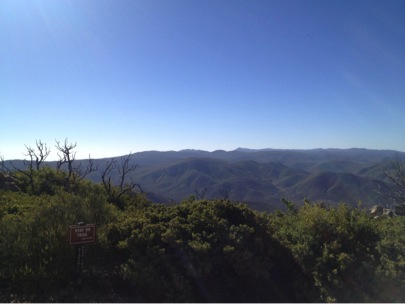
Chambers 1 – Pedro Fages (12.5 – 18.5)
I checked in and out of Chambers in less than 5 minutes and continued on my way. Not a lot to report on this section other than some beautiful singletrack.
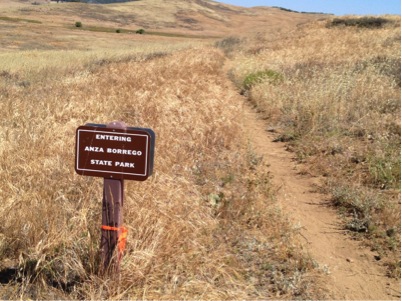
Pedro Fages – Sunrise 1 (18.5 – 23.2)
I got into Pedro Fages and was ahead of the cutoffs by and hour. I was feeling good and was managing my nutrition and hydration pretty well, too. The next stretch left the runners pretty exposed, and as the day wore on, it quickly became apparent that the “heat” was wearing runners down.
I say “heat” because, while it didn’t necessarily feel hot out there, there was nothing protecting the runners from that sun! Staying on top of electrolytes and hydration became paramount. Before I knew it I was rolling into the Sunrise 1 and was incredibly excited to see Christina there (Sunrise was the first spot for crew access).

Sunrise 1 – Pioneer Mail 1 (23.2 – 30.4)
After talking with C and Jessica (my buddy Mark’s girlfriend), I was out of there and back on my way. Oh, and the views got better, too.

Pioneer Mail 1—Penny Pines 1 (30.4 – 34.4)
Felt great here and actually started getting some time in the bank, which felt great.
Penny Pines 1 – Todd’s Cabin (34.4 – 39.6)
Nothing much to report here.
Todd’s Cabin – Red Tail Roost (39.6 – 44.7)
I had run this area on several training runs (as well as during the PCT 50), so knowing what was just ahead was helpful. I’d caught up to several other runners I’d trained with in the months prior and we ran it in towards Red Tail Roost.
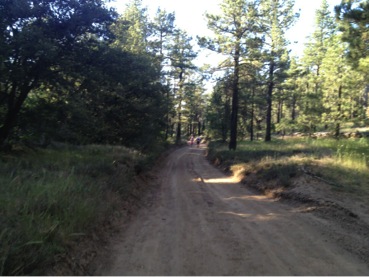
Red Tail Roost – Meadows (44.7 – 51.1)
As I came into Red Tail Roost, I was still feeling good – but was hungry. I knew I’d been on the move all day (in and out of aid stations in less than 5-7 minutes) and hadn’t rested much at all, due to skirting some of the cutoffs. I decided to sit, and have some real food before heading out and picking up my pacer at Meadows.
Boy, things did NOT work out like that.
I left Red Tail Roost feeling good, but didn’t get more than a half-mile out when I got an unbelievably intense sharp pain in the bottom of my forefoot. Sharp enough to stop me in my tracks. Now, I’ve had blisters, and “sore” feet, but this was unlike anything I’d ever felt.
I stopped and started walking, noticing that if I kept my weight off my forefoot I could at least keep moving. So, move along I did … all the way into Meadows, but my running had been replaced with a slow walk.
Meadows – Penny Pines 2 (51.1 – 56.3)
It was dark by now, and the last section had cost me dearly in regards to time. I was back to less than an hour to hit the cutoffs. Not a place I wanted to be with a bum foot.
I picked up my pacer, Paul, who was gracious enough to offer to pace me on my first 100. At this point I felt like I owed it to him to keep going. He had been out there for a few hours and I wanted to desperately believe that this pain would subside and I’d be able to keep going. I modified my stride and incorporated a walk/run and somehow managed to get to Penny Pines 2.
Penny Pines 2 – Pine Creek (56.3 – 64)
We got to Penny Pines 2, and Paul could tell that I was hurting pretty bad. I’d dropped pretty far behind him and couldn’t shuffle along for much more than 20-30 yards without having to stop.
To say I was thinking clearly at this point is probably inaccurate, but aside from the physical pain, I was mentally and nutritionally still very much in this race and wanted to believe that I could keep going. I left Penny Pines with Paul and was still somehow managing to make forward progress, even though we were predominately walking by this point.
Then, it happened. My foot literally “gave out” and I couldn’t put any more pressure on it. Zero. And I knew right there … I’d be getting my first DNF in the San Diego 100.
After a brief mini blow up of emotions—frustration, anger, sadness, etc.—I pulled myself together and slowly (read: very, very, VERY slowly & with the help of Paul) made it to the next aid station, where I turned in my bib (I’d missed the cut off by 20 minutes).
My first attempt at 100-miler would end at Mile 64, Pine Creek, after 19 ½ hours on my feet.
-3 Weeks Later-
If my recap seems a bit blurry compared to ones in the past it’s because it is. The past three weeks have been full of me replaying the race in my head, asking myself tons of questions about what I could have done differently, and self-diagnosing myself through research. At first I was determined to find out what went wrong.
- Was I undertrained?
- Had I not tapered properly?
- Was running in minimalist-style shoes a bad idea for me?
- Did running the PCT 50 just four weeks prior set me up for an overuse injury?
The questions went on and on, which is one of the reasons it took so long for me to write this post.
After three weeks, and a lot of questions, I believe I have the answer and–regardless of what happened out there—my reasoning for not finishing was much simpler than I wanted to believe.
It just simply wasn’t my day.
Once I was able to accept that, I was able to move on and begin again. Which is exactly what I did yesterday, as I went out on my first run since the race. Time to start looking forward and stop dwelling on the past. That’s what it’s all about, right? Relentless Forward Progress.
Man, I needed that.
 Life Through the Miles