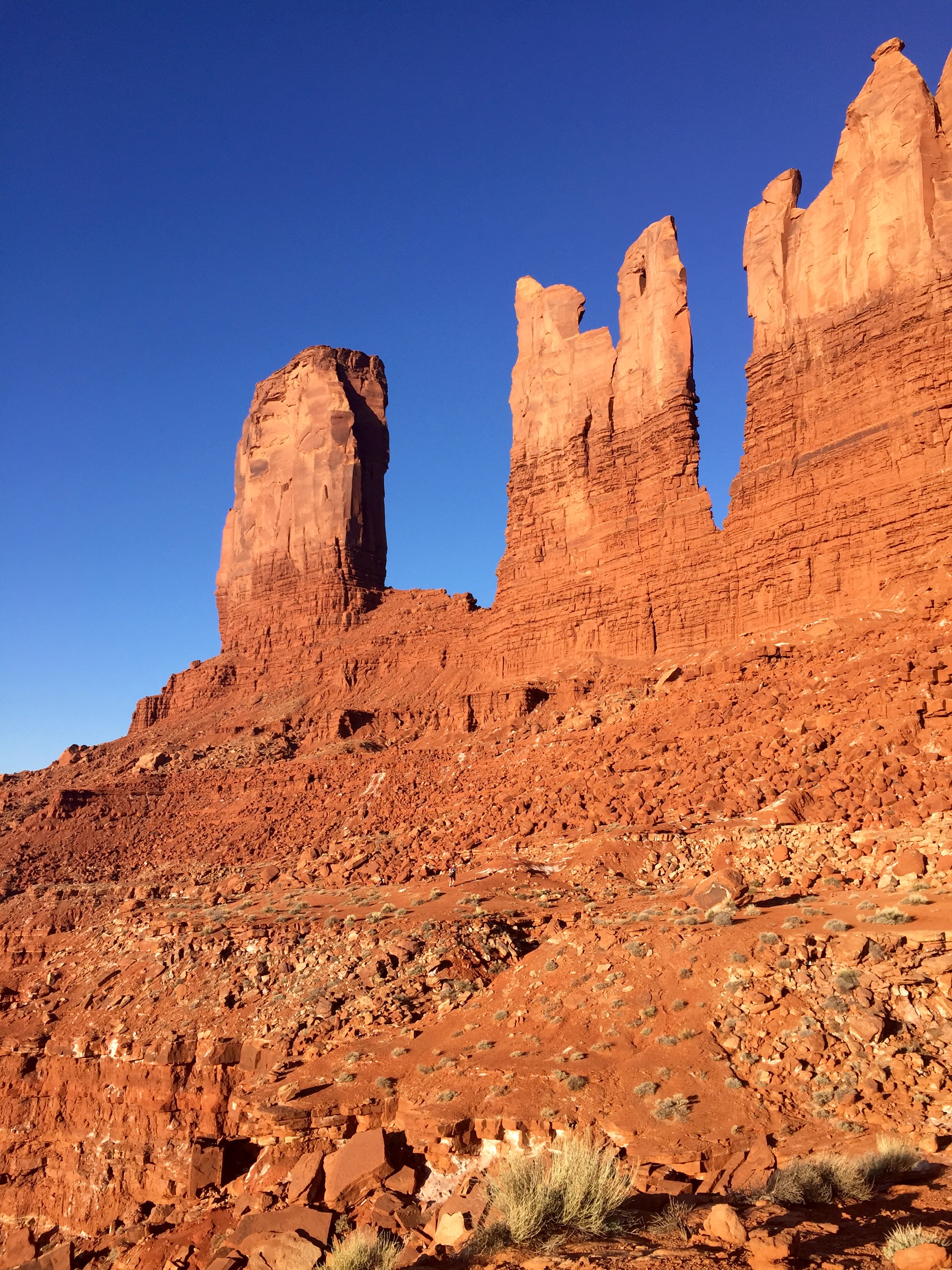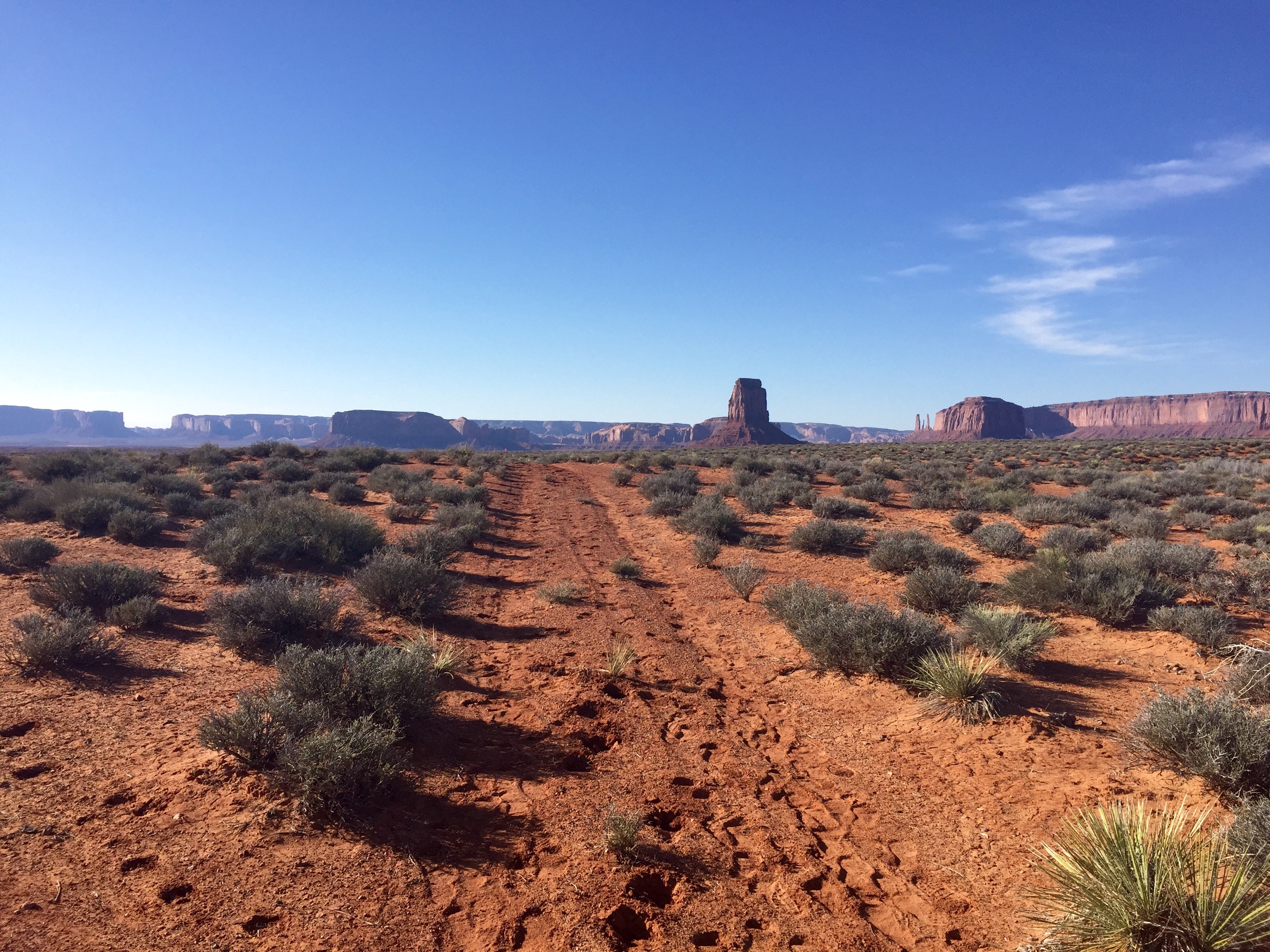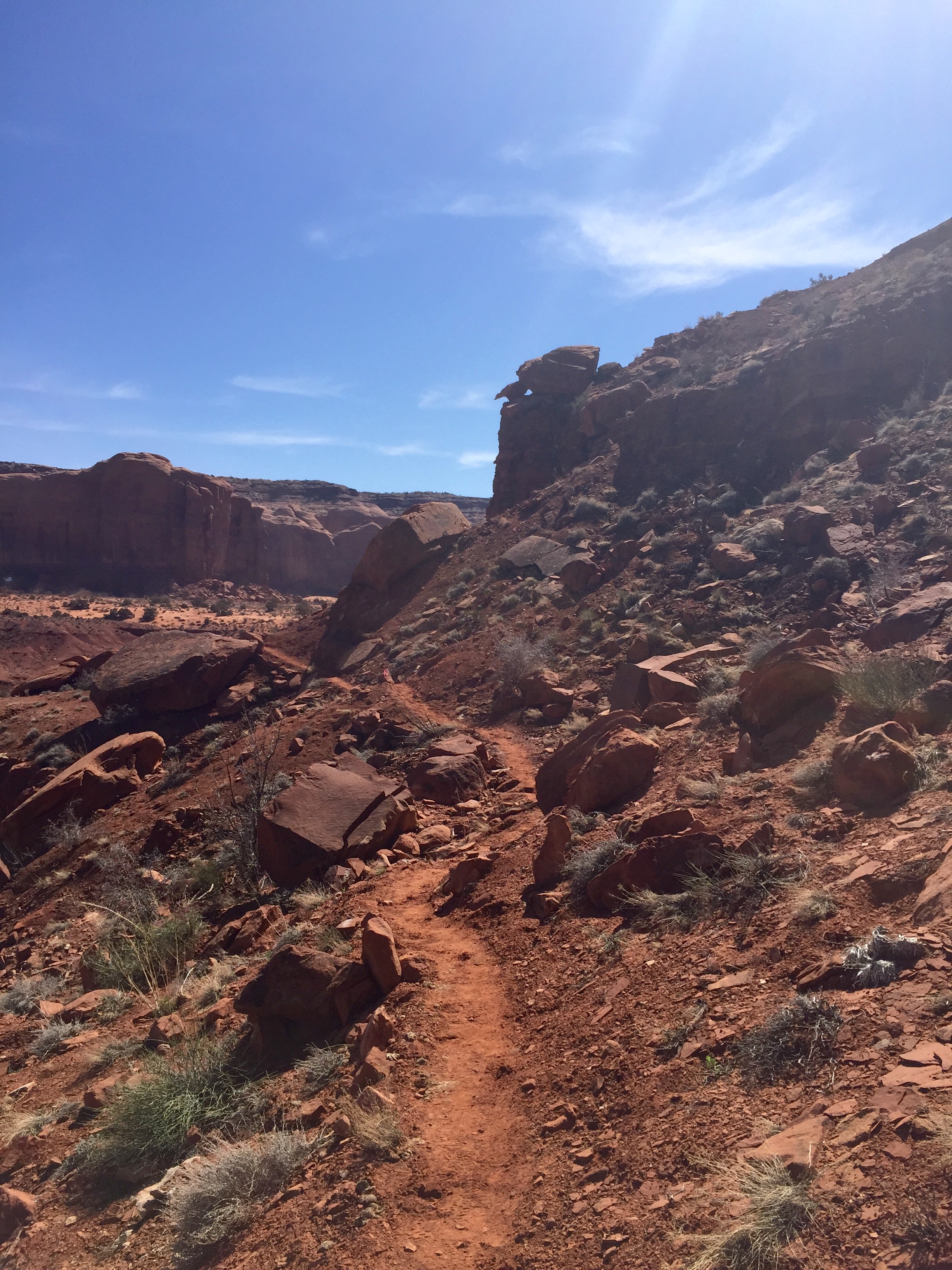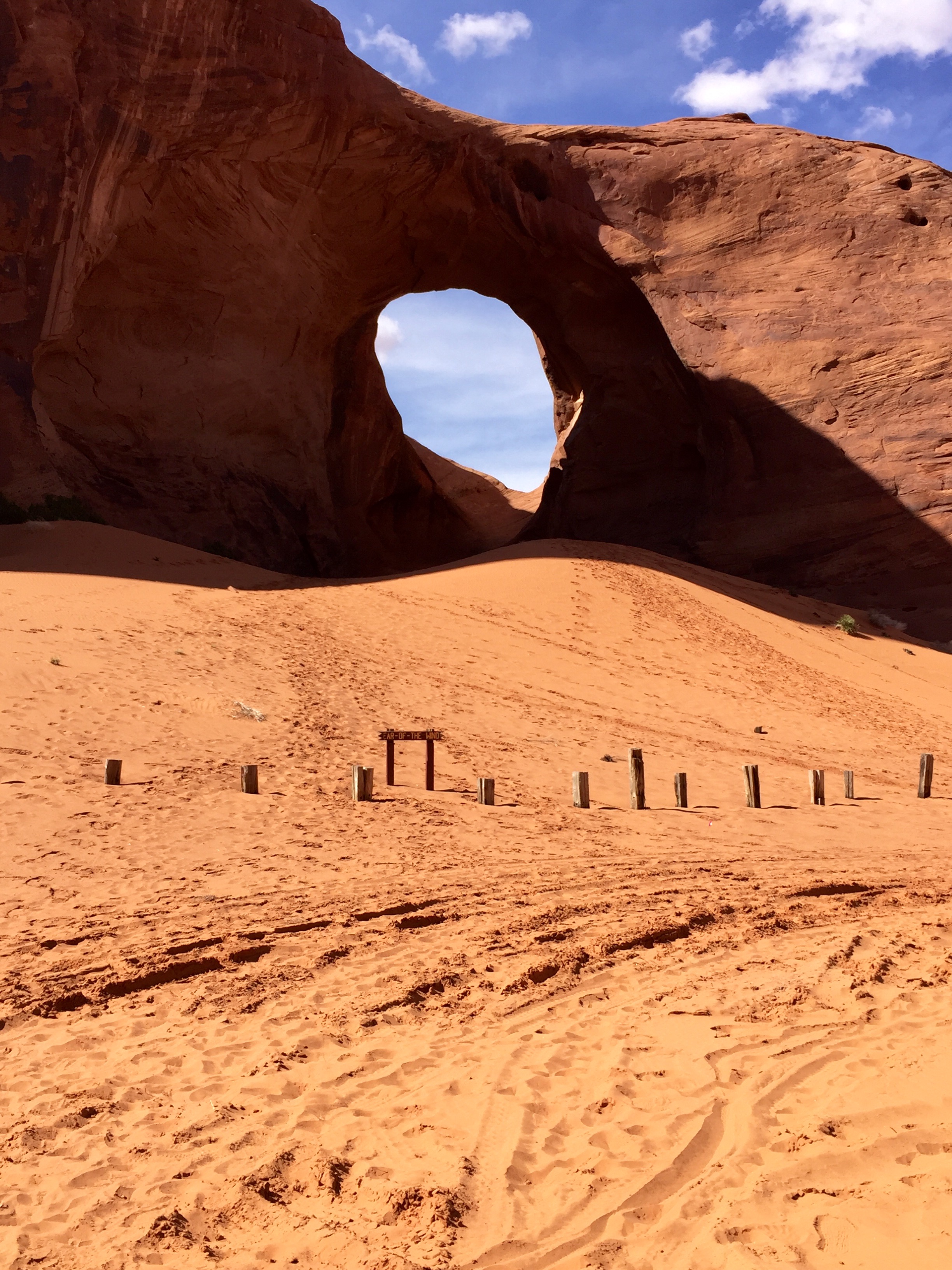
Lost Boys 50

Blown Away: The Lost Boys 50 Mile Ultramarathon

“There is something primitive about running from the desert to the mountains.” – Ben Hian, Lost Boys 50 course record holder.

 Ever since I moved to San Diego and started running ultras, I wanted to run the Lost Boys 50. I had heard so much about this race and its long, checkered history that I knew I had to experience it for myself. Last weekend, I got that chance.

C and I—and my parents—arrived in Julian the Friday before the race. My parents had flown out from Iowa to see me run, so I was extra excited about that. We had a great dinner at Romano’s before retiring to our cabin for the night (Note: If you’re running a race in the Anza Borrego/Cuyamaca/Mt. Laguna area and want a good Italian, pre-race meal, this is the place).

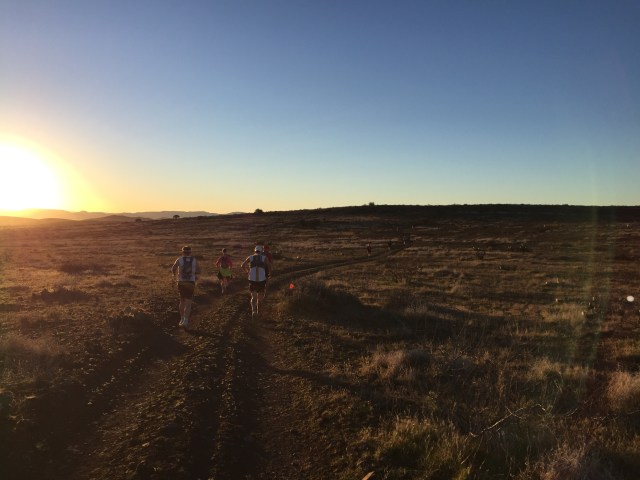
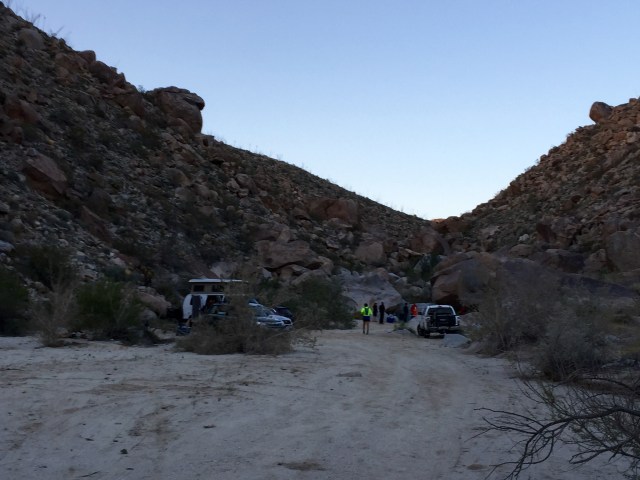
We were up early since I had to be at Lake Cuyamaca to catch the 3:30 a.m. shuttle down to the desert. Once on the bus and heading down I began to hope the weather would hold up for what was sure to be an epic race day.

As the runners piled out of the shuttle, we quickly realized we were going to be in for a windy, WINDY day. But it wasn’t raining, so we had that going for us.

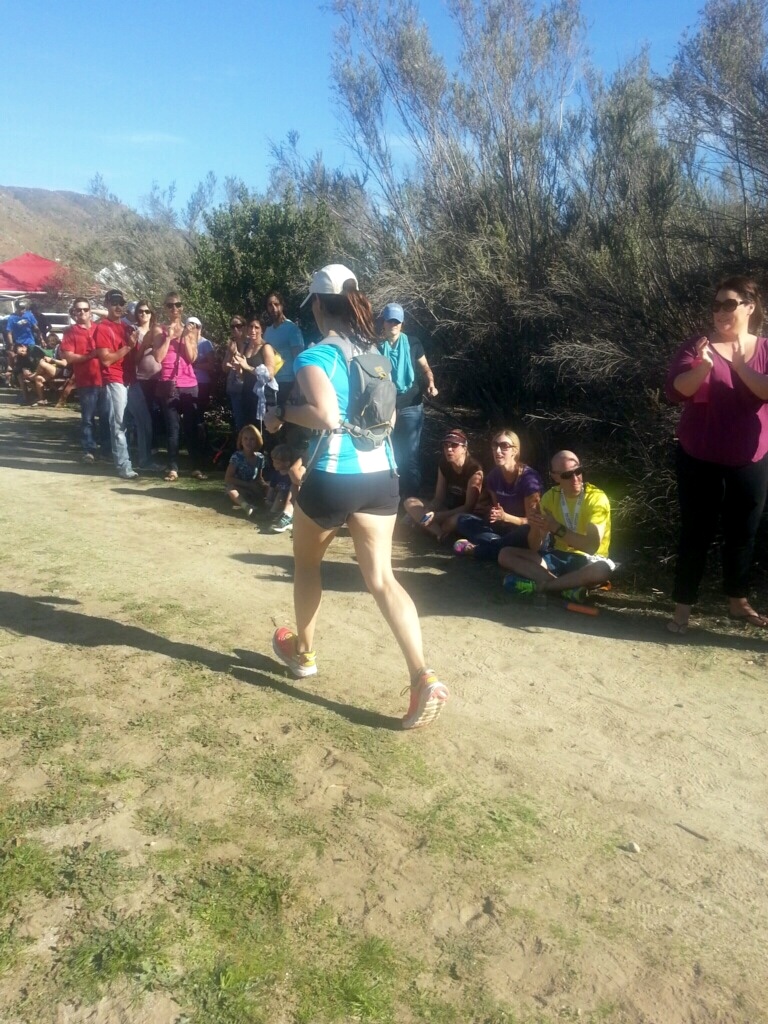
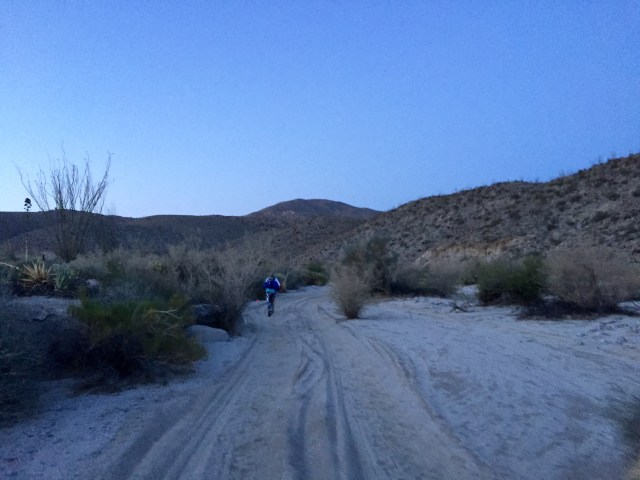
After checking in and hiding from the wind back on the buses, it was time to go. Runners huddled around Race Director Brian Gonzales to get a quick history lesson on the race before heading out into the still-dark desert. Just like that, we were off.
Lost Boys 50

Pinyon Wash to Blair Valley (0 – 17.9)

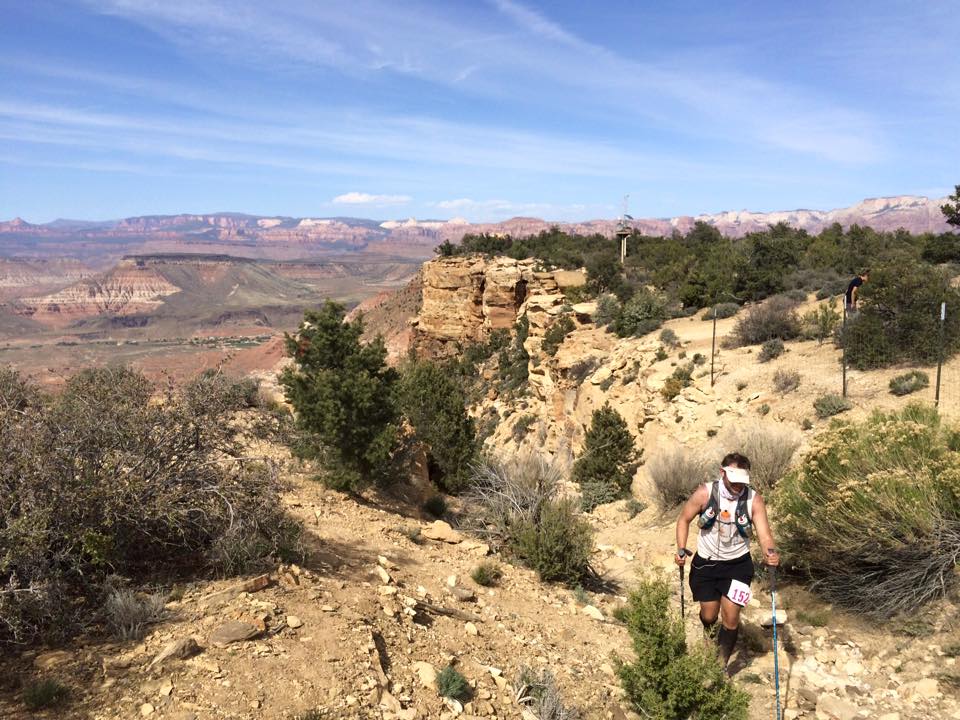
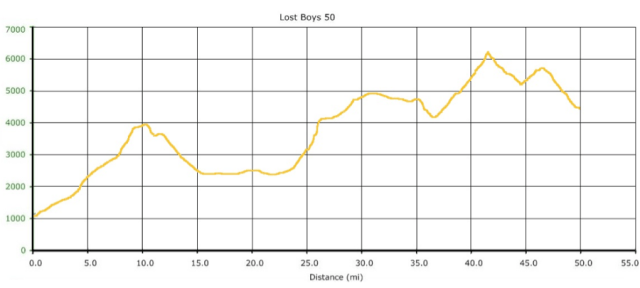
The race wasted no time accumulating the 9K of elevation gain runners were promised, with the first 10 miles of the course gaining almost 3K. I ran into my friend Carlos, and we took it easy together the first 5 miles, catching up on life and things since we hadn’t seen each other in awhile.
Lost Boys 50

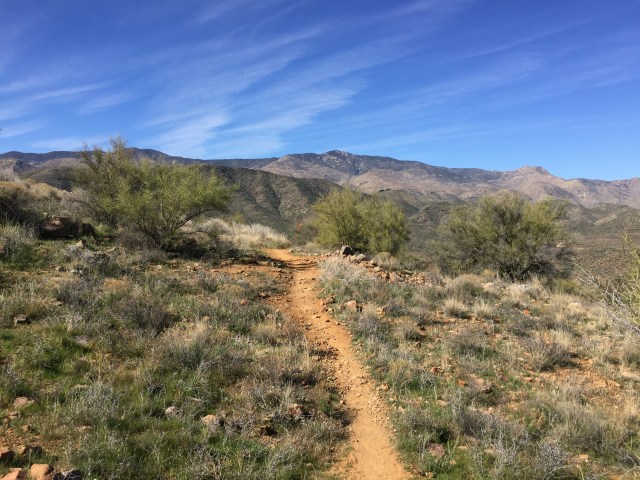
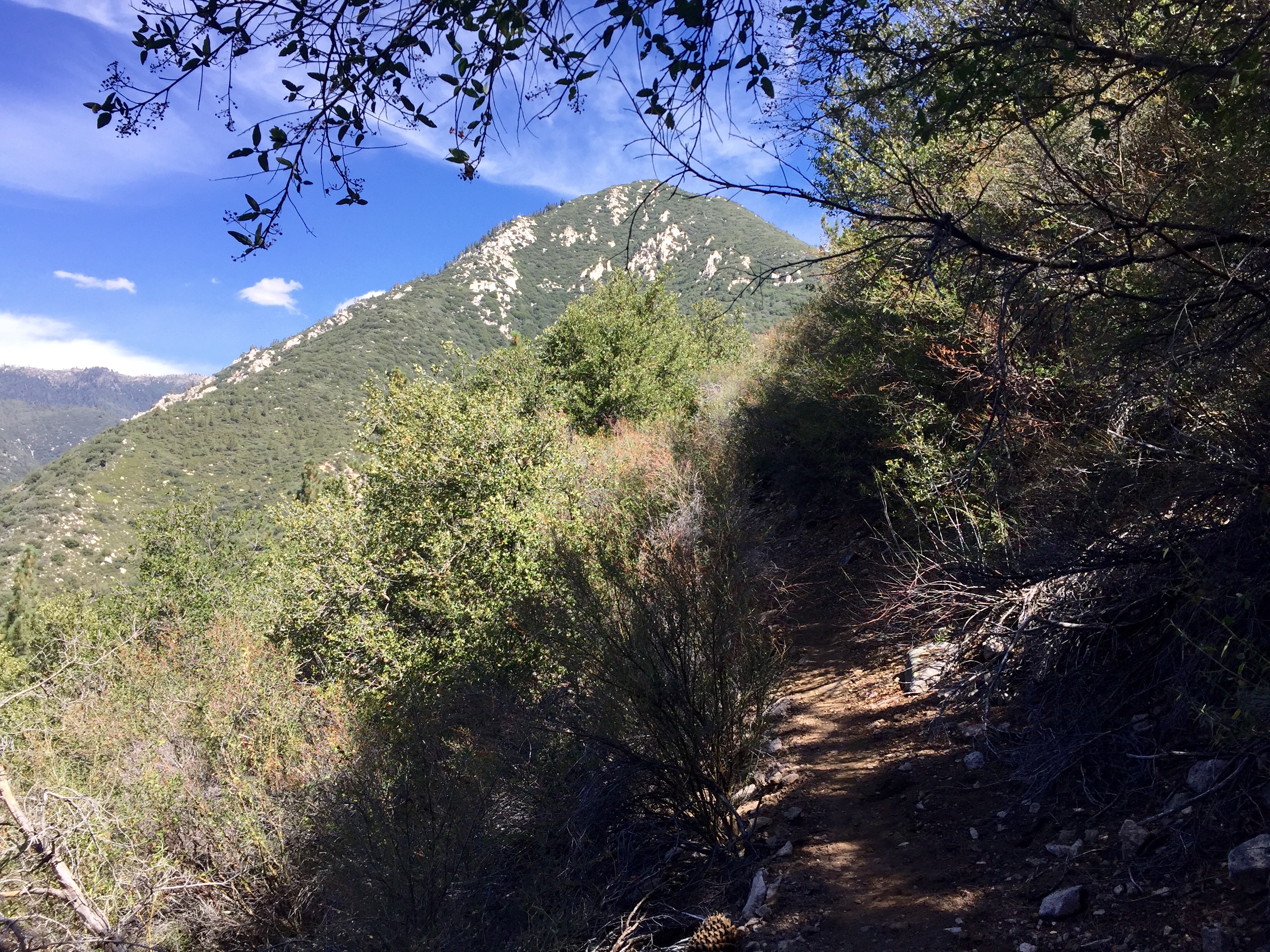
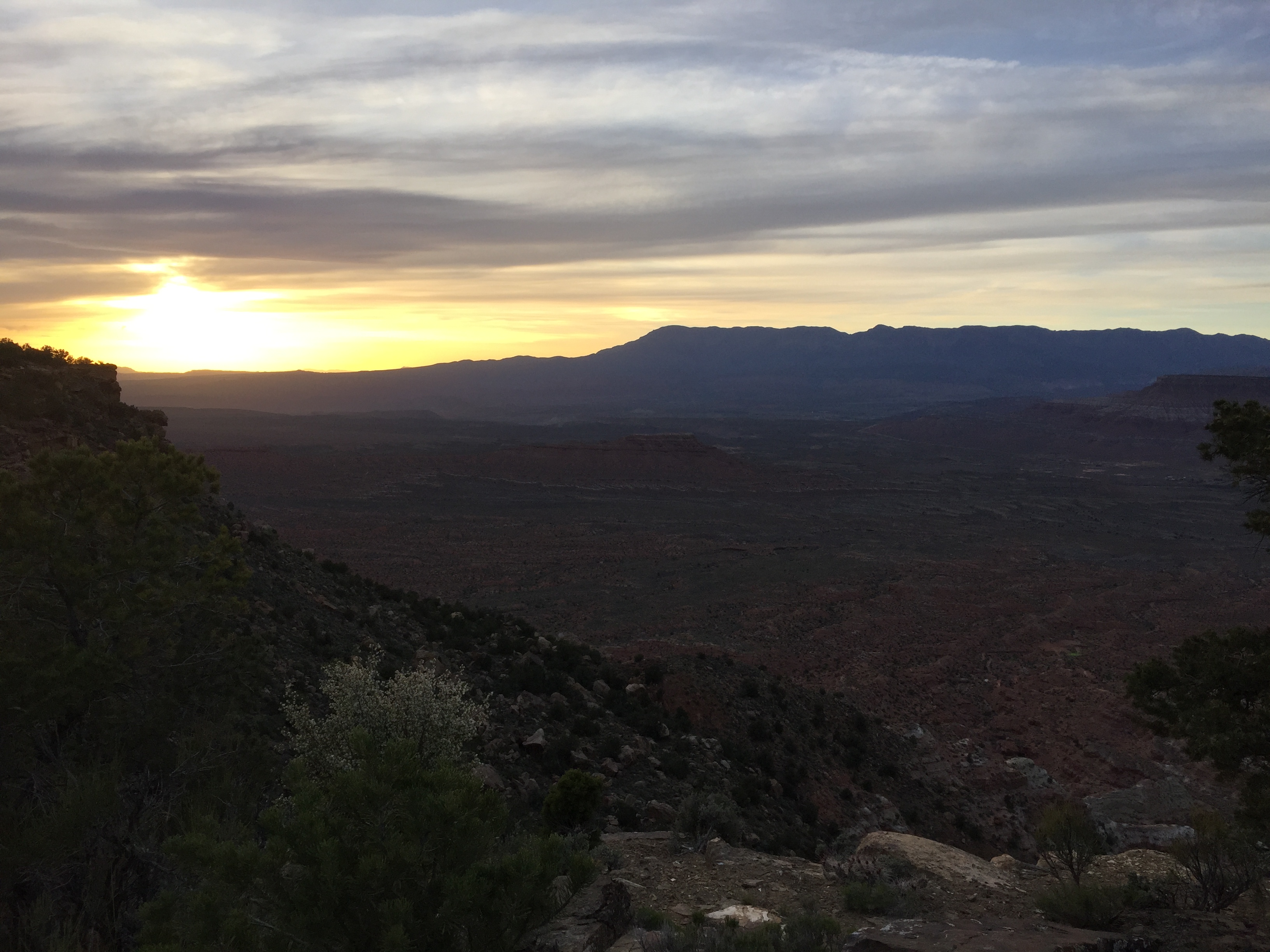
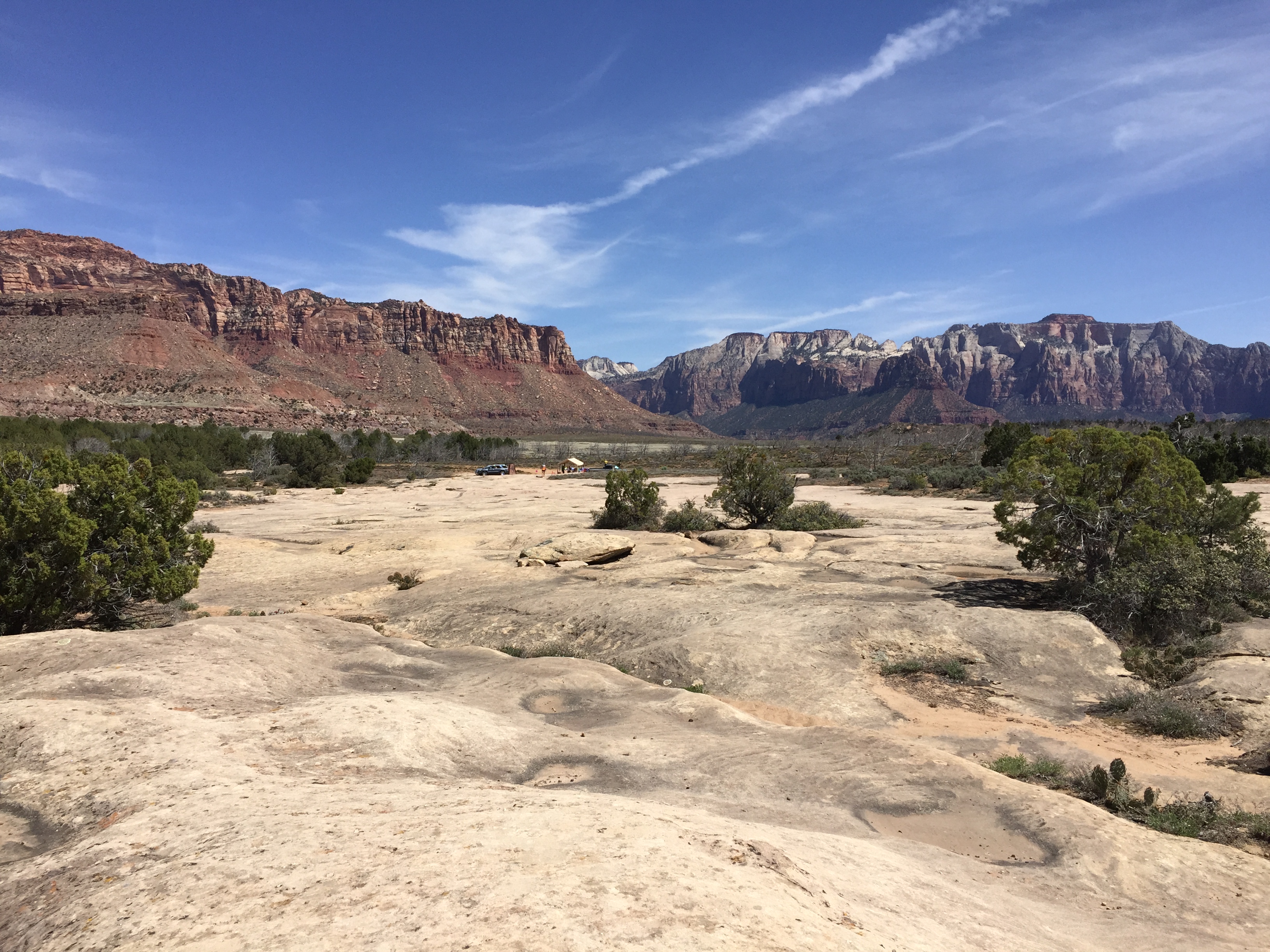
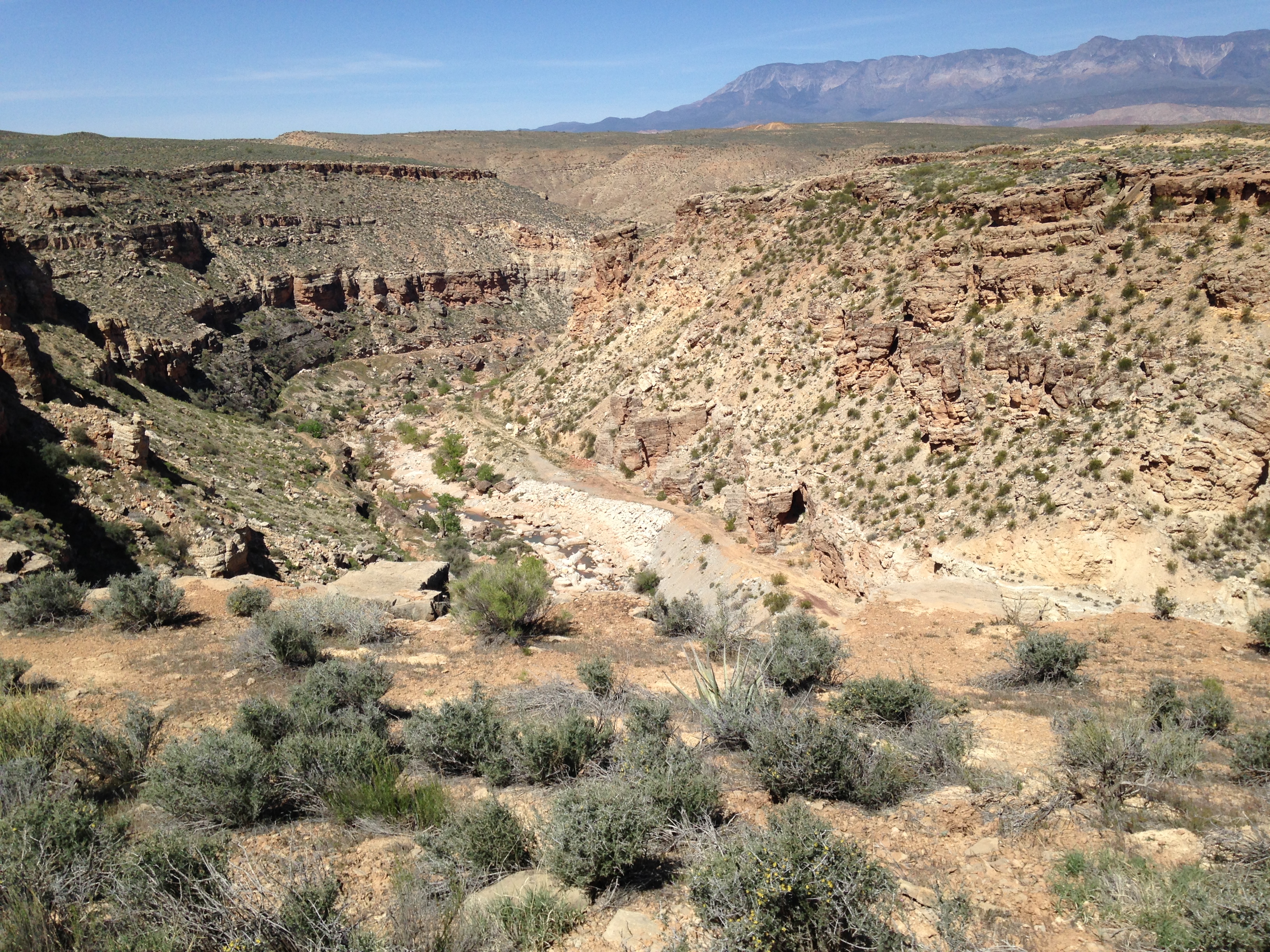
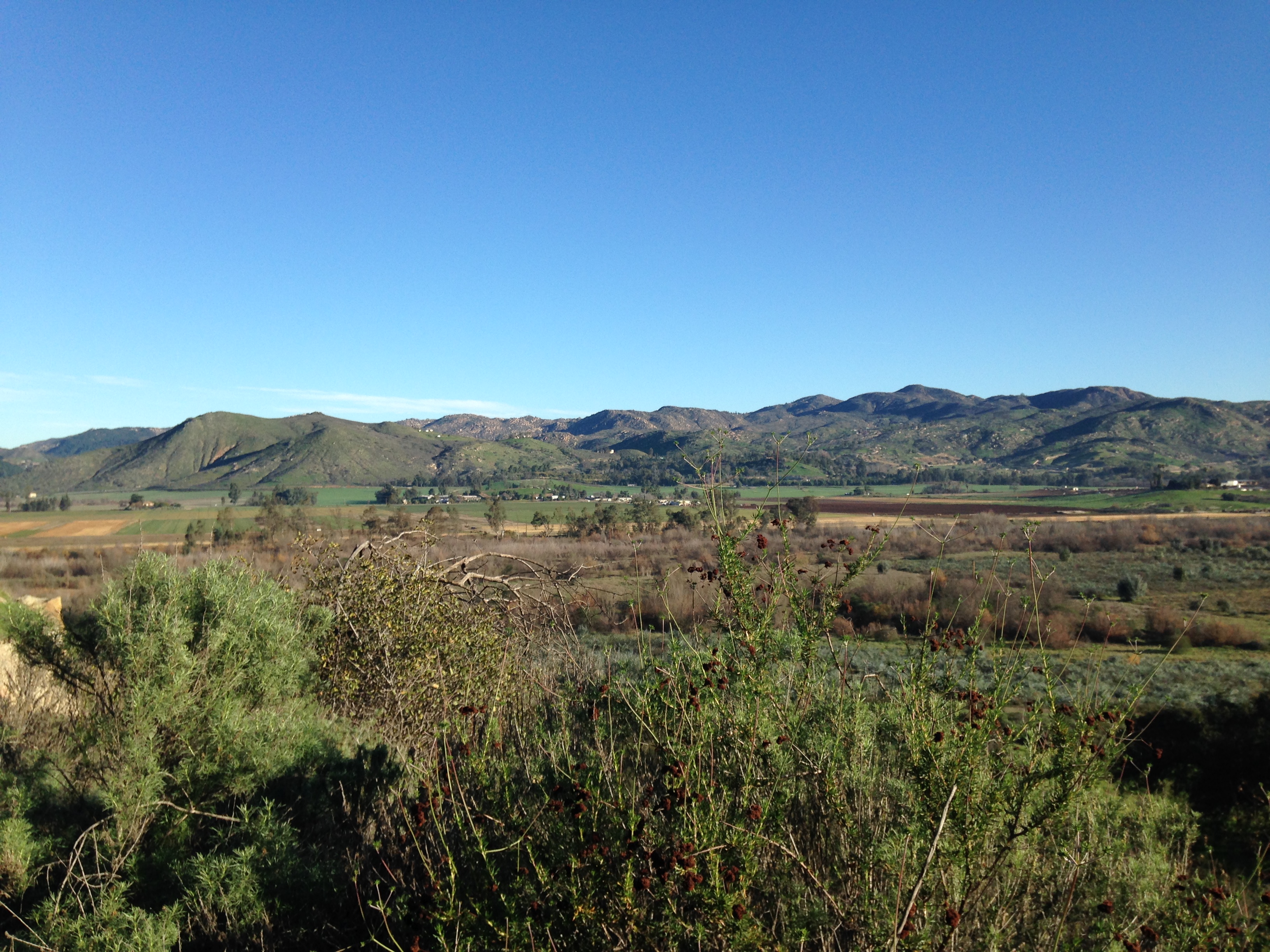
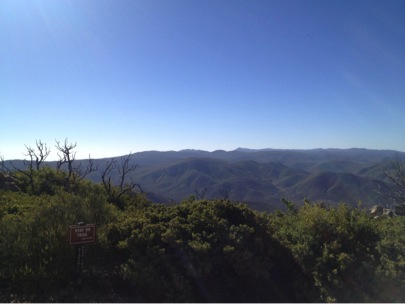
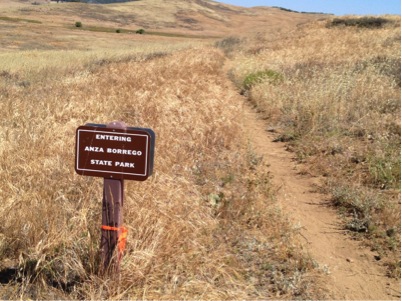
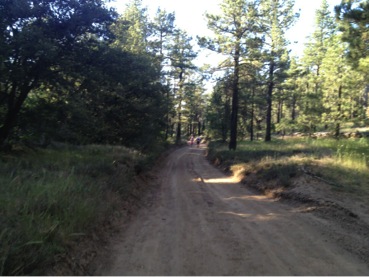
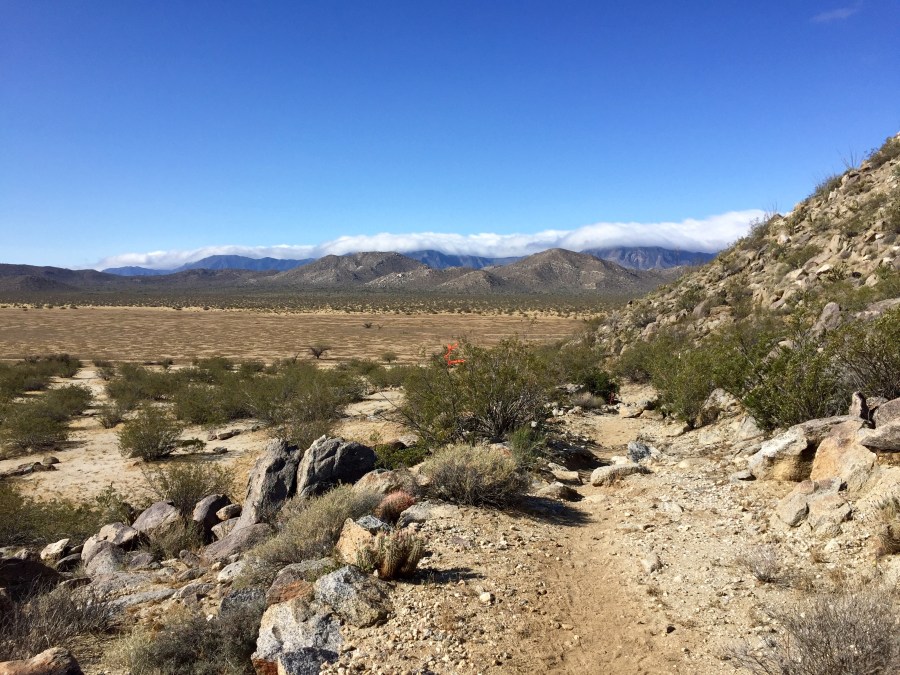
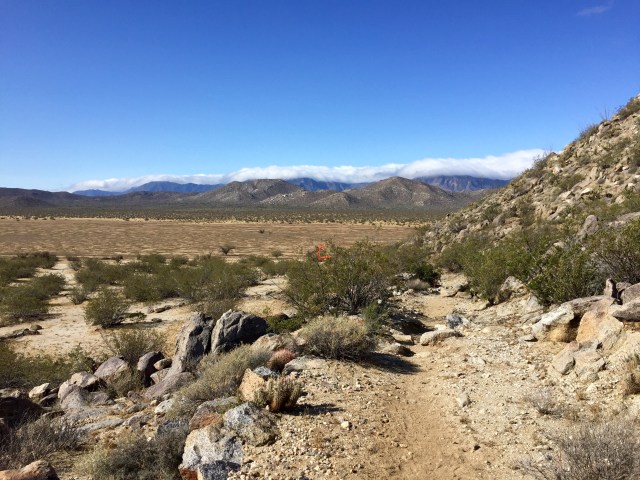
After hitting Boulders Aid (5.1), Carlos took off and I settled in for the day. I was really excited about the first 20 miles of the course, since I’d never ran in that area before. The miles didn’t disappoint. Runners ran through desert canyons, scurried over boulders, came across abandoned mines, and more. It was amazing.
Lost Boys 50

I hit Pinyon Mountain Valley Aid (12.4) right on time. I was in/out of the aid station in less than 3 minutes and was off toward Blair Valley, the first place I’d be able to see C and my parents. The next few miles were a slow steady decline where I just zoned out, enjoyed the desert views and began thinking about how I wanted to tackle Oriflamme Canyon.
Lost Boys 50

Blair Valley to Pedro Fages (17.9 – 29.4)

I got into Blair Valley Aid at about 9:15 a.m., and was met immediately by C and my parents. I could tell my parents were getting into crewing and were having a great time already. I was so glad they were getting the opportunity to experience the sport I love first hand. After refueling, and chatting with them a bit I was off.

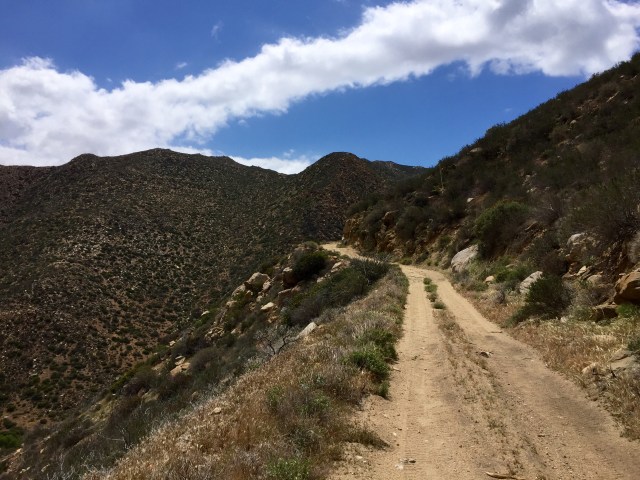
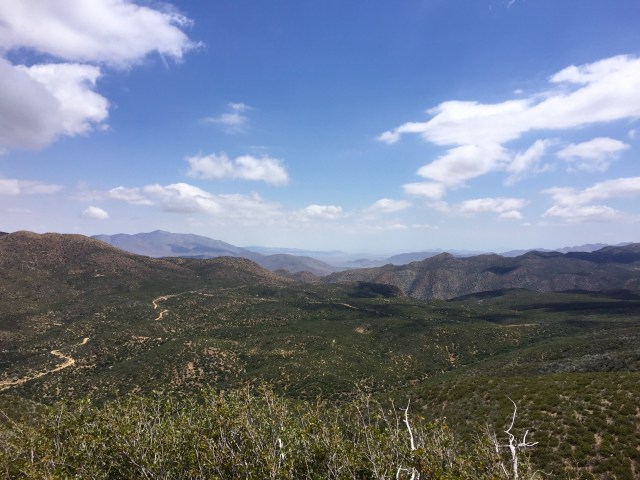
Before I knew it I was back at the mouth of Oriflamme Canyon. It had been a few years since I’d ran through the canyon, but I still knew it was going to be brutal. I settled into low gear and started the long grind to the top. On the way up I reflected on just how far I’ve come in my training in only a few short years.
Lost Boys 50

Lost Boys 50

I got out of the canyon with no major issues and after a short run across the meadow, I arrived at Pedro Fages, right on schedule.

Pedro Fages to Cuyamaca Lake (29.4 – 50ish)

Though I was on my goal time, I was tired. The constant battling of the wind and slow steady climbing was really taking it out of me. I took some time to reload my pack, refuel on soup, and get rejuvenated by wiping myself down with a Pro Energy Towel. A few minutes later, I was out and heading toward West Mesa aid station feeling great.

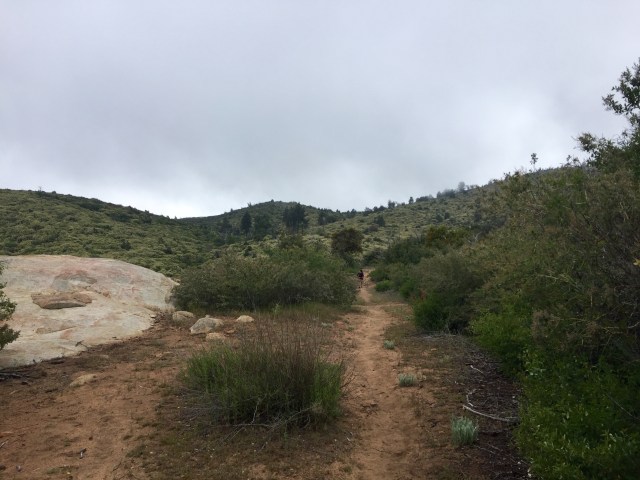
The forecast had called for rain and we’d been lucky enough to dodge it all day … but one look at the sky and I knew it was only a matter of time, so I picked it up a bit.
Lost Boys 50

By the time I got to West Mesa aid (36.1) I was actually ahead of my goal time. There was one climb left, the climb up to Cuyamaca Peak. I wasted no time getting started.

I was pretty wiped out by this point. The more I ascended, the more I was climbing up and into a foggy/cloudy oblivion. By this point runners were very spread out, so at times it almost felt like you were in a dream … or a horror movie.
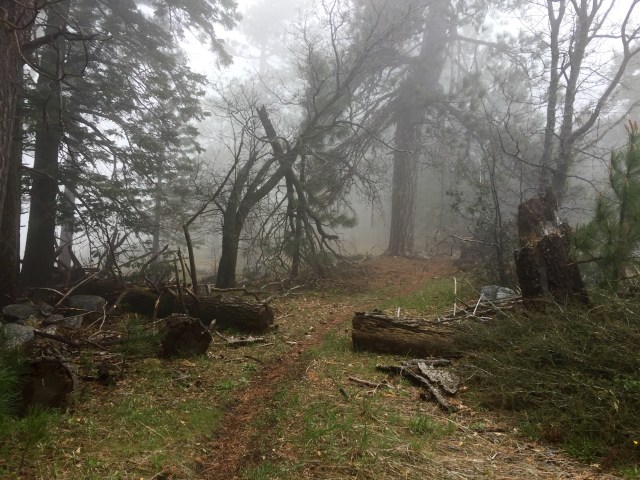
Pic 7

Regardless, I was in the zone and cruising. Apparently cruising a bit too well, as I blew right by a very well-marked junction and ended up off course for awhile. It was a minor mental blow, but I couldn’t help but laugh when I retraced my steps back to the junction. It was so well marked!

I finally got to Cuyamaca Peak aid station (42.9) dropped my pack, grabbed a grilled cheese and cup of soup and started the short out-and-back climb to the peak, before looping back through CP aid, grabbing my pack, and beginning my descent.

As I started my descent I was mentally prepared to just run it down and into Cuyamaca Lake, but as I started coming down I replayed what one of the aid station volunteers at CP aid had said “you have mostly down left, than just a little up before you get to the finish.”

Immediately it hit me; we’re going up over Middle Peak!

Damn.

The same thing happened in last year’s San Diego 100, where I somehow completely spaced on the fact that both races hit Middle Peak before returning to the start. Needless to say, I got one more “nice little climb” in before I hopped on the Sugar Pine Trail and began my (real) final descent.

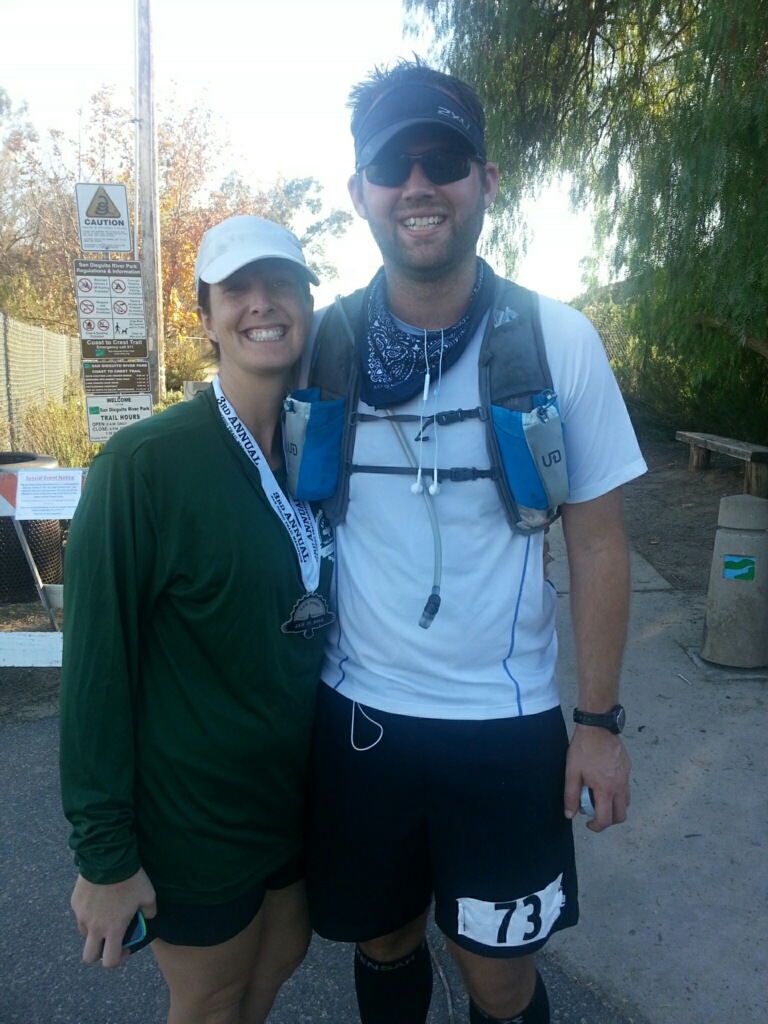
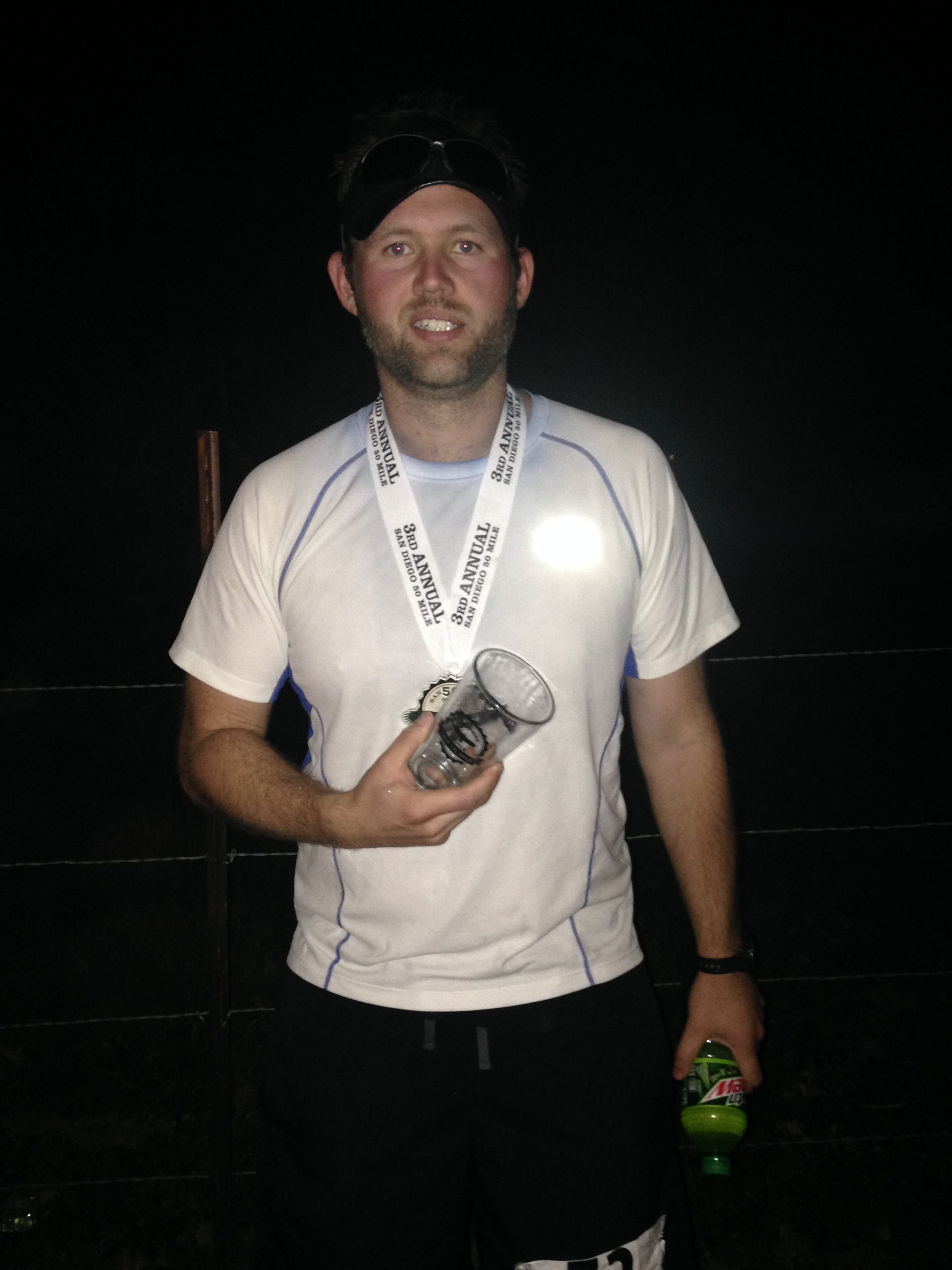
I crossed the finish line in 13:28, and couldn’t have been happier. All things considered, it was my strongest ultramarathon finish to date.

Lost Boys 50

Post race thoughts:

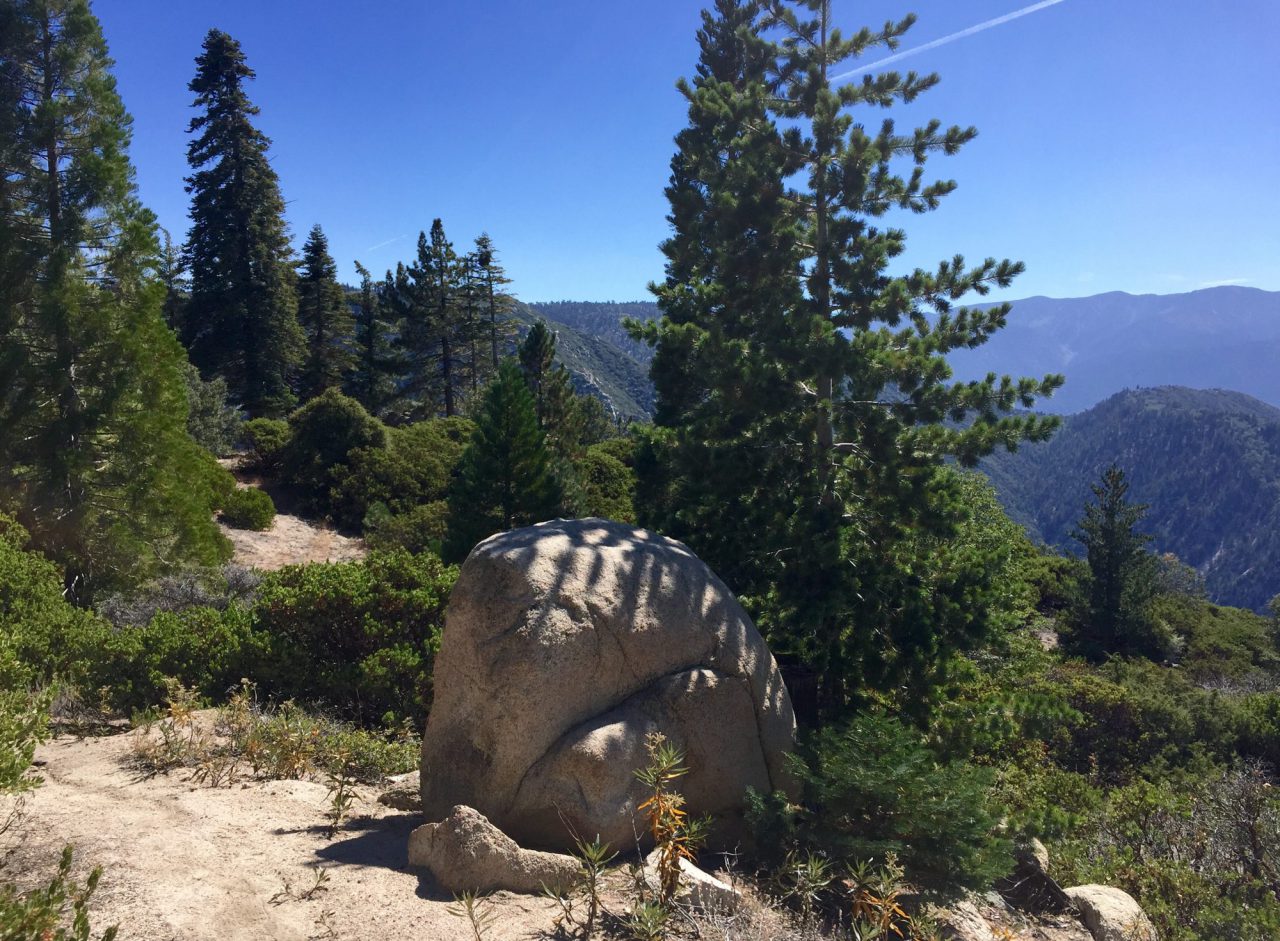
This race blew me away on so many levels. Running from the desert (at 1,000 feet), to the mountains (almost 7,000 feet), made for an unforgettable day of constantly changing scenery. The aid stations were so well stocked and staffed it was unbelievable. In fact, I found out later there were about 60 runners who started the race…and almost 60 volunteers helping them out.

That’s how great the ultra community is—especially the San Diego scene.

There was something else that played a significant role in my strongest finish to date, a new training device I have been using called GoMore. Stay tuned for a detailed post on my experience with the product—and how it has helped redefine the way I train.

What’s next?

The Lost Boys 50 was my final tune-up before returning to the San Diego 100 this June. My record with the SD100 is tied at 1-1. Depending on how the final weeks of training go will determine if I take on this year’s race solo or supported.

We’ll see…

Take care,

G
 

Race Recap: Ugly early—The Black Canyon 100K

Last weekend C and I took a mini-trip to Arizona so I could run my first race of the year, Aravaipa’s Black Canyon 100K.

We took Friday off and hit the road early, arriving at the packet pick up/expo by 4:30 p.m. From there we headed up to the cabin we were staying at for the night, which was just a few minutes from the start line.

Race Day

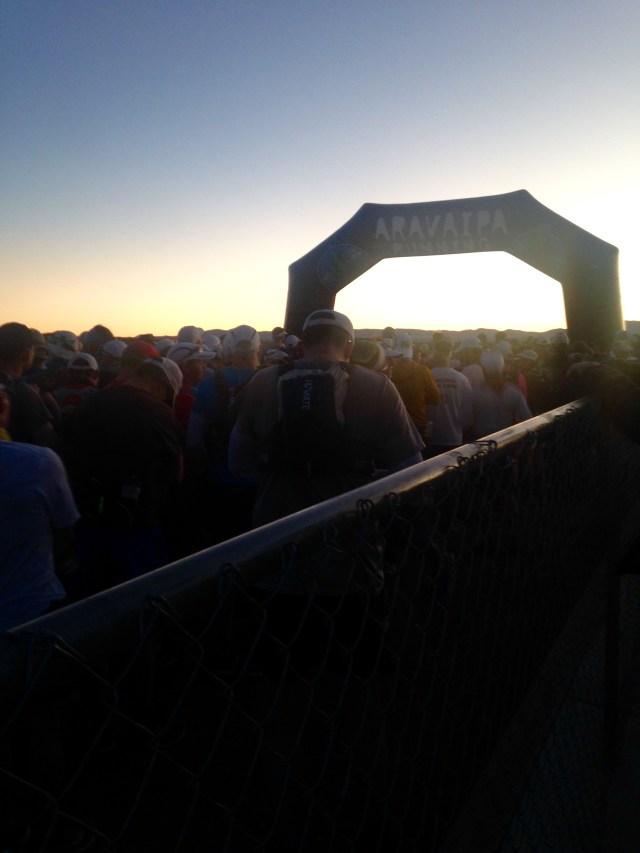
Staying close to the start really paid off. I was able to “sleep in” and get to the start with plenty of time to spare. The field was BIG, with more than 200 people starting the 100K—and another 60+ runners in the 60K, which would start an hour after the 100Kers.

As we were all waiting in the high school, I couldn’t help but comment on what a well-organized event this was already turning out to be! Not only were we able to wait in the school—we were treated to flushing toilets, coffee, cinnamon rolls, and more. I ran into a few local San Diego running friends, wished them well, and then headed out to the start.

Off and running

The race starts with a lap around the high school track before runners embark upon their 100K point-to-point journey on the Black Canyon National Recreation Trail. Temps were forecasted to be hot … and they didn’t disappoint.

In my usual fashion I settled in toward the rear and focused on finding that smooth, steady pace for the day. Before I knew it I was through mile 15, things were feeling great, and, for the first time I was well ahead of schedule.

Black Canyon 100K
Runners at the start 
Black Canyon 100K
The course is a Western States Qualifier that features a deceptively challenging elevation profile.
Black Canyon 100K
Out for a long day (somewhere around mile 6)

Getting ugly

There’s a saying in ultrarunning: “If you start to feel good during an ultra—don’t worry, you’ll get over it.” While I always thought I knew what that meant, it took on an entirely new meaning in this race, and it started around mile 17.

I’ll spare the details, but for the next 15 miles I had some of the worst G.I./stomach issues I had ever experienced while running. This slowed me to a crawl, and as temperatures continued to rise, my spirits began to sink.

Things had quickly turned into a hot, miserable day in the desert.

Despite the fact I was well off my goal pace, I kept moving forward, all the while trying to fix my issues on the move. Was it nutrition? There was a bug floating around my office all week that had taken a few people out—was that it? Maybe it was just the heat? I don’t really know, but, eventually—almost 15 miles later—I started to feel like myself again.

… I couldn’t believe it. I’d kept myself moving.


Black Canyon 100K
I take it back. There was one good thing during this time. The views.

If there was any benefit to shuffling along the first 30 miles, it would be that my legs were pretty “fresh” for the back half. I came into Black Canyon aid station, quickly refueled, and headed back out.

I’d heard a lot of people talk about the challenges of the back half of the course. I quickly found out their warnings were valid. There were several significant climbs and multiple stream crossings that felt GREAT given the heat, but were a bit much on my feet.


Black Canyon 100K
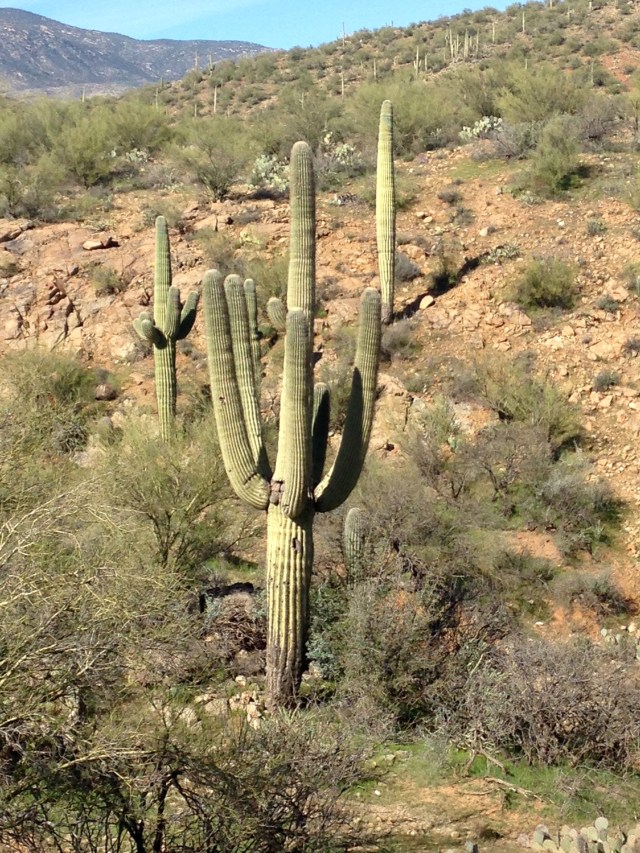
Giant saguaros lined the course most of the way

Back in the saddle

At mile 45, I was back and feeling great much better. Though my initial goal had gone out the window, I realized I still had a shot at finishing under 17 hours, which would give me a Western States qualifier, but I would have to push it. Hard.

This was a defining moment for me. I battled those thoughts that said just getting to the finish would be “good enough” and that I could justify my finish since the first half of my day went so terribly. I said no.

Instead, I decided to push it.

Bringing it home

The last 15-18 miles were a bit of a blur. I had my music going and a goal on my mind. Before I knew it I was crossing the finish in 16:33.

I’d beaten my stomach issues.

I’d beaten the heat.

But most importantly, I beaten the cruel voice of complacency that can sneak into your head when the day doesn’t go your way.


Black Canyon 100K
What just happened?
Black Canyon 100K
With my better half at the finish

 Post-race thoughts

Though I don’t know exactly what caused my stomach issues, I do have a few ideas that I’m looking into. Regardless, this still ranks as one of my more memorable races.

Ultras are such a journey. They’re a journey of the body, the mind, and even the soul. And just like any journey, there will be ups and downs, with the real test being how you manage them. For me, I could have given up and said “Meh, not my day. Stomach problems got the best of me.” But that’s not in my nature. Instead, I chose to stick it out—to stay in the fight. I’m glad I did, because I learned much more about myself by doing so.

Thoughts on the race: This was my first Aravaipa Running race and it was fantastic. Everything—from the packet pick up expo, to pre-race amenities, aid stations, course markings, and the finish line party were all top notch. I can’t wait to come back and run another one of their events.

Take care,

G


Kodiak 50 Mile

Breathtaking: The Kodiak 50-Mile Ultramarathon

I was so excited to get back up to Big Bear. If you remember last year, I had planned on running the Kodiak 100 to avenge my DNF at the San Diego 100. Well, a year later (and WISER!), I realized how glad I was that didn’t happen, because Kodiak would have eaten me alive.

The facts are the Kodiak races are incredibly challenging – and in looking back, I can honestly say I wouldn’t have been ready. I needed another year of experience under my belt. And now I had it.

Kodiak 50 Mile
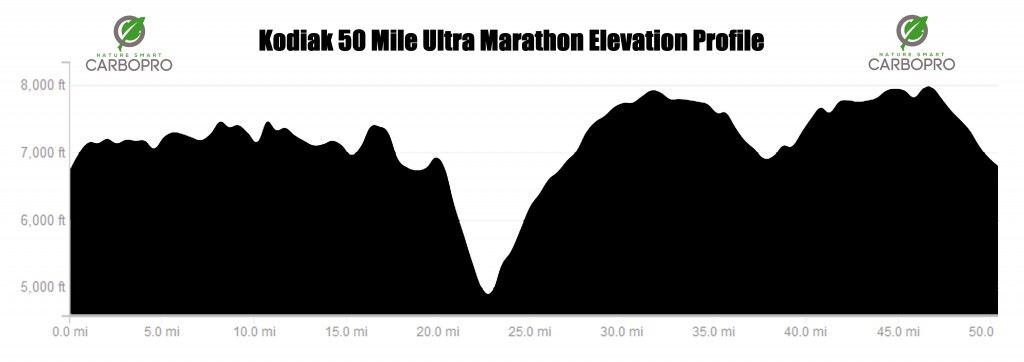
Kodiak 50-Mile Course Profile

Arriving in Big Bear

I went to Big Bear last year to train for a weekend, but this was going to be C’s first time up here. I was excited for her to experience the mountains.

We arrived early Friday afternoon, checked in at the race headquarters and walked around talking to several of the vendors who were there at the expo. CarboPro, Altra, Orange Mud, Clif Bar, Feed the Machine, and more were all in attendance – as well as members of the Tarahumara who were selling homemade items to help raise money for their families and to cover race expenses. I spent some time talking with a few of them and ended up buying a pair of authentic, homemade running sandals from them. They are amazing and I have them displayed on my “running wall” at home.

Race Day

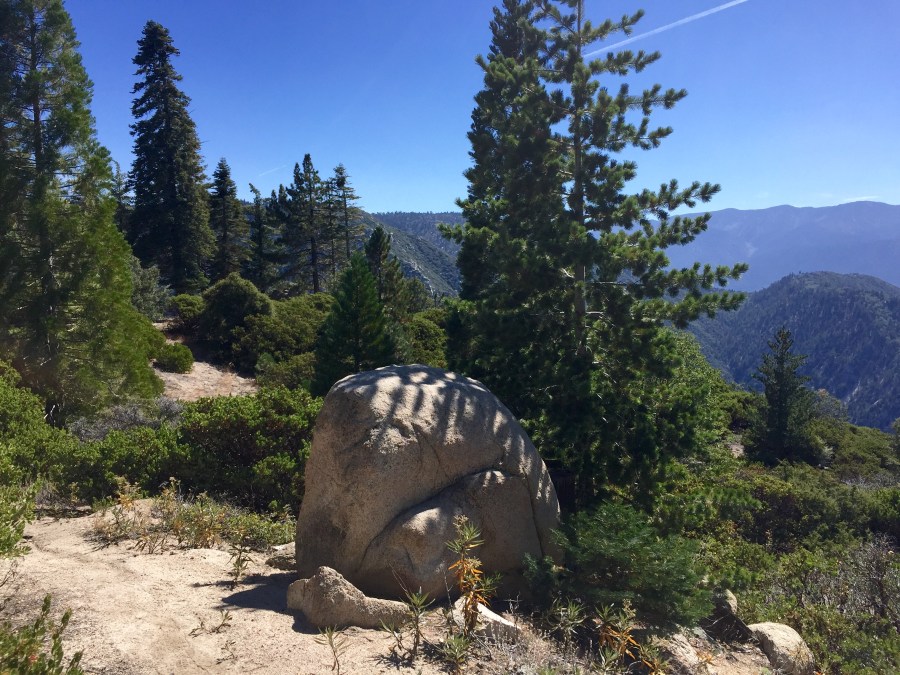
The 50-mile race started on the north side of the lake at the Hana Flats aid station. C drove me around the lake to the start, and after hanging around for about 20 minutes, we were off. I knew even before the race started that the elevation would be a factor for me (the majority of the race is run at 7,000 feet or higher). Knowing this, I planned to settle into a consistent, controlled pace and pay close attention to how I was feeling. As we ran, runners were greeted by an unbelievable sunrise over Big Bear Lake.

I knew right then that the race was going to be a good one.

Kodiak 50 Mile
Sunrise over Big Bear Lake
Kodiak 50 Mile
Trail leading into Snow Valley

Settling in

The first 15 miles went very smooth. I stayed conscious of my breathing and settled in to enjoy the views. By the time I got to Snow Valley Aid Station, I was feeling still feeling good and a bit ahead of schedule. Having CarboPro at all of the aid stations was a huge win, since that is what I normally train with.

I refueled and headed out from Snow Valley and toward what I had heard over and over was the crux of the course: Siberia Creek Canyon. Needless to say, it lived up to the hype.

Kodiak 50 Mile
At the top of Siberia Creek

After descending into the canyon and reaching the bottom, runners passed through an aid station before beginning the long, 3,000-foot climb up the other side.

Kodiak 50 Mile
Aid station at the bottom of the canyon

Siberia Creek was beautifully brutal.

As beautiful as it was, the climb out WENT. ON. FORVER!

Kodiak 50 Mile
Climbing out of Siberia Canyon

Once out of the canyon, I arrived at Champion Aid. My climbing had been efficient and controlled, so I was still feeling strong. But things were about to get even better because we were about to run on one of my favorite sections of single track: The Skyline Trail.

As the sun fades away

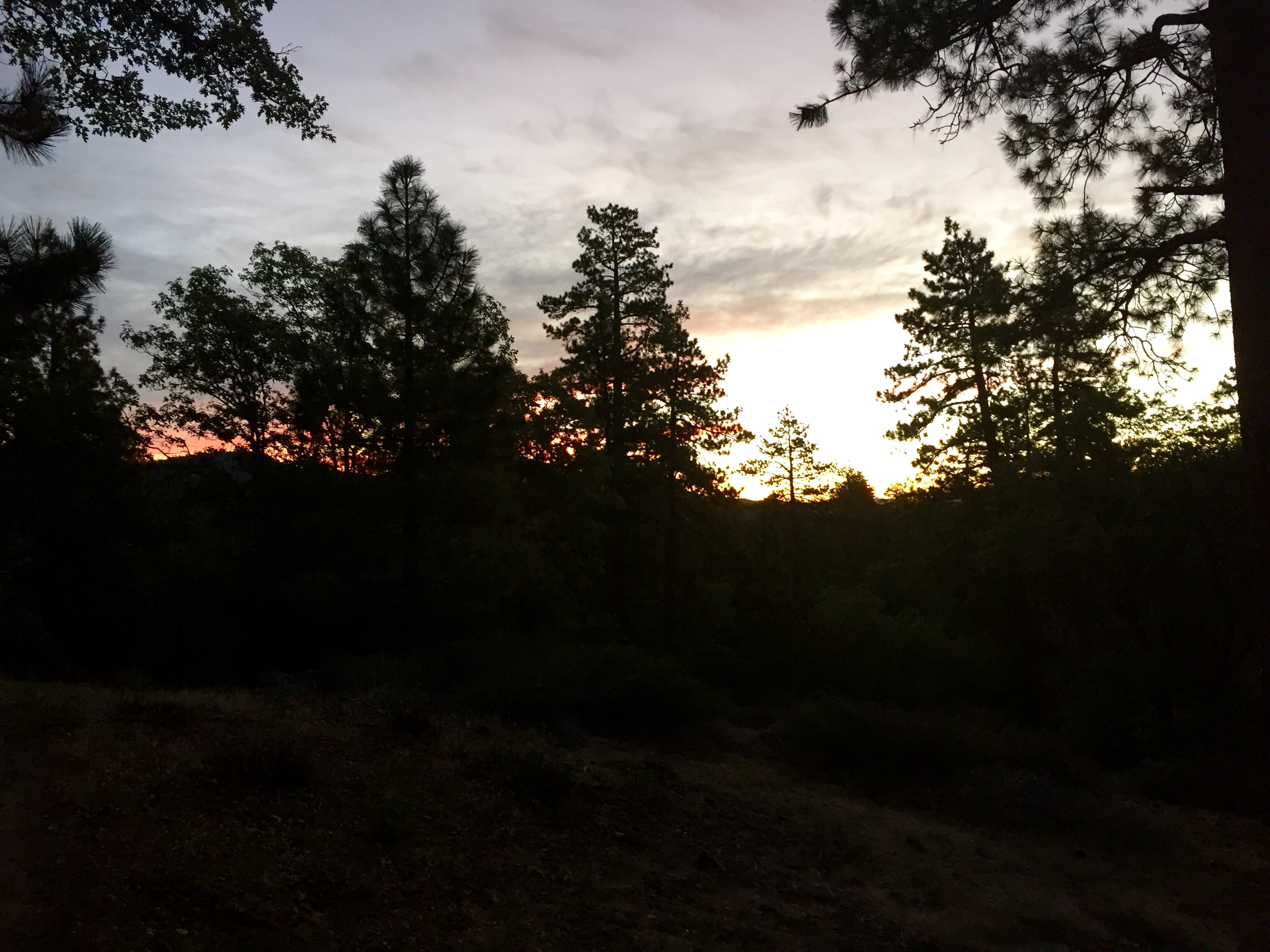
The views from the Skyline Trail were absolutely unreal. And the fact that it was sunset made for some views that will be with me for a lifetime. My phone was dead by this point so I didn’t get any pictures – but in retrospect, it was better that way. I ran in silence and just took it all in. And it was perfect.

As darkness settled in, so did an increased level of pain and discomfort … but that was a small price to pay for an incredibly scenic race.

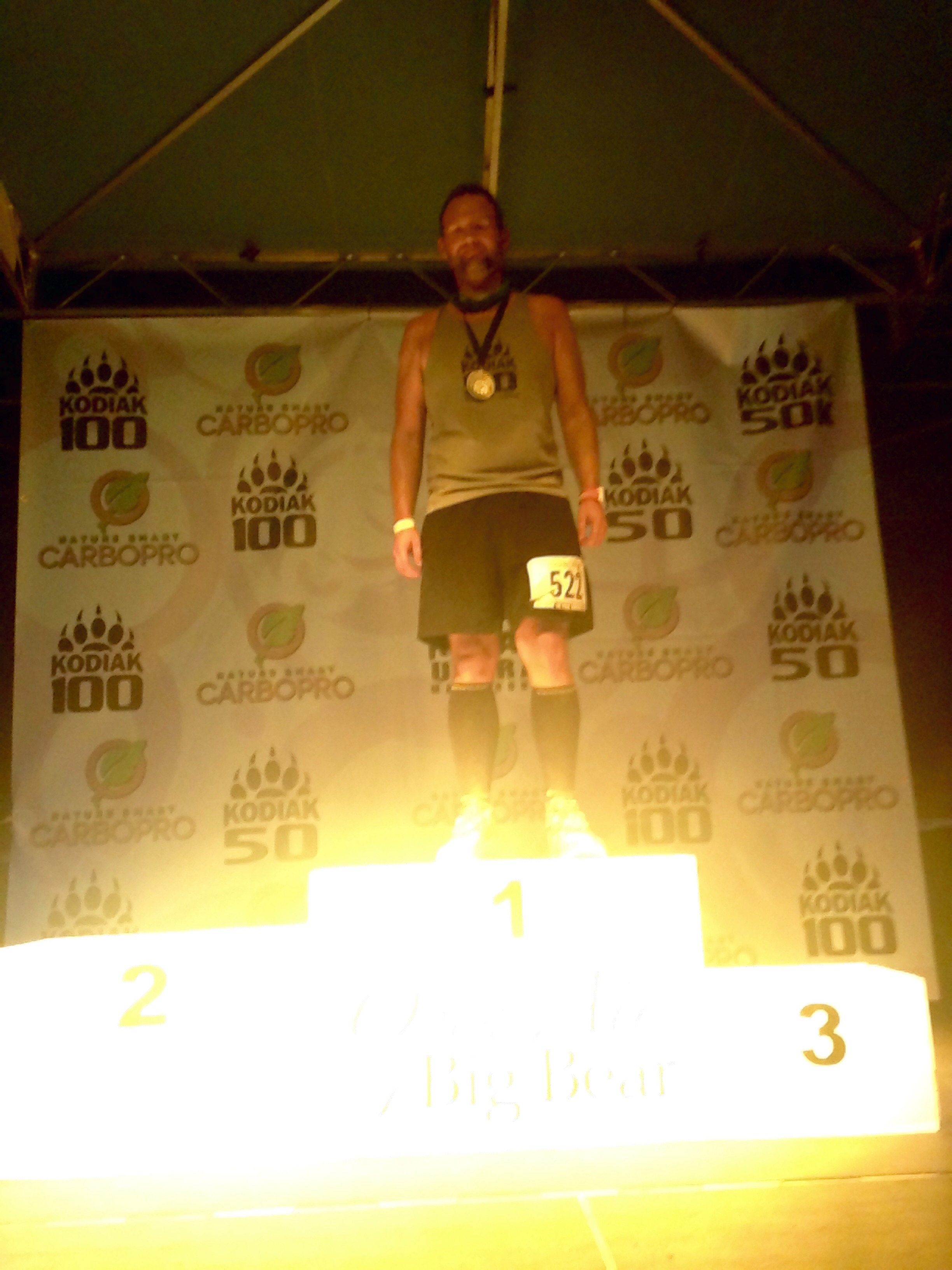
I crossed the finish line in 14:58 (38/54) and felt great about it. This was my first time running a true “mountain ultra” … and I must admit, I loved it. The prolonged altitude and steep climbs were the price of admission to experience the picturesque views and run on the alpine-infused single track. A price that I’d happily pay again for a similar experience.

Kodiak 50 Mile
Kodiak 50-Mile finisher!

Definitely a top-notch race and memorable weekend in the mountains.

Take care,

G
Never Give Up: The Zion 100

Some memories have a significant impact on you and your future. For me, last year’s DNF at the San Diego 100 was one of those memories. It humbled me and forced me to be honest with myself and my abilities. But it also lit a fire within me and became the catalyst for a rematch with the 100-mile distance, and I chose the Zion 100.

Ever since Monument Valley, I’d been experience some significant hip pain that had derailed my last 3-4 weeks of training. I’d gotten a few massages and met with a running doctor to help diagnose and fix the issue. I was physically feeling about 75-80%, however, mentally I was at 110-120%, so I figured I could hit the start line of Zion at 100% (of sorts).

Zion bound

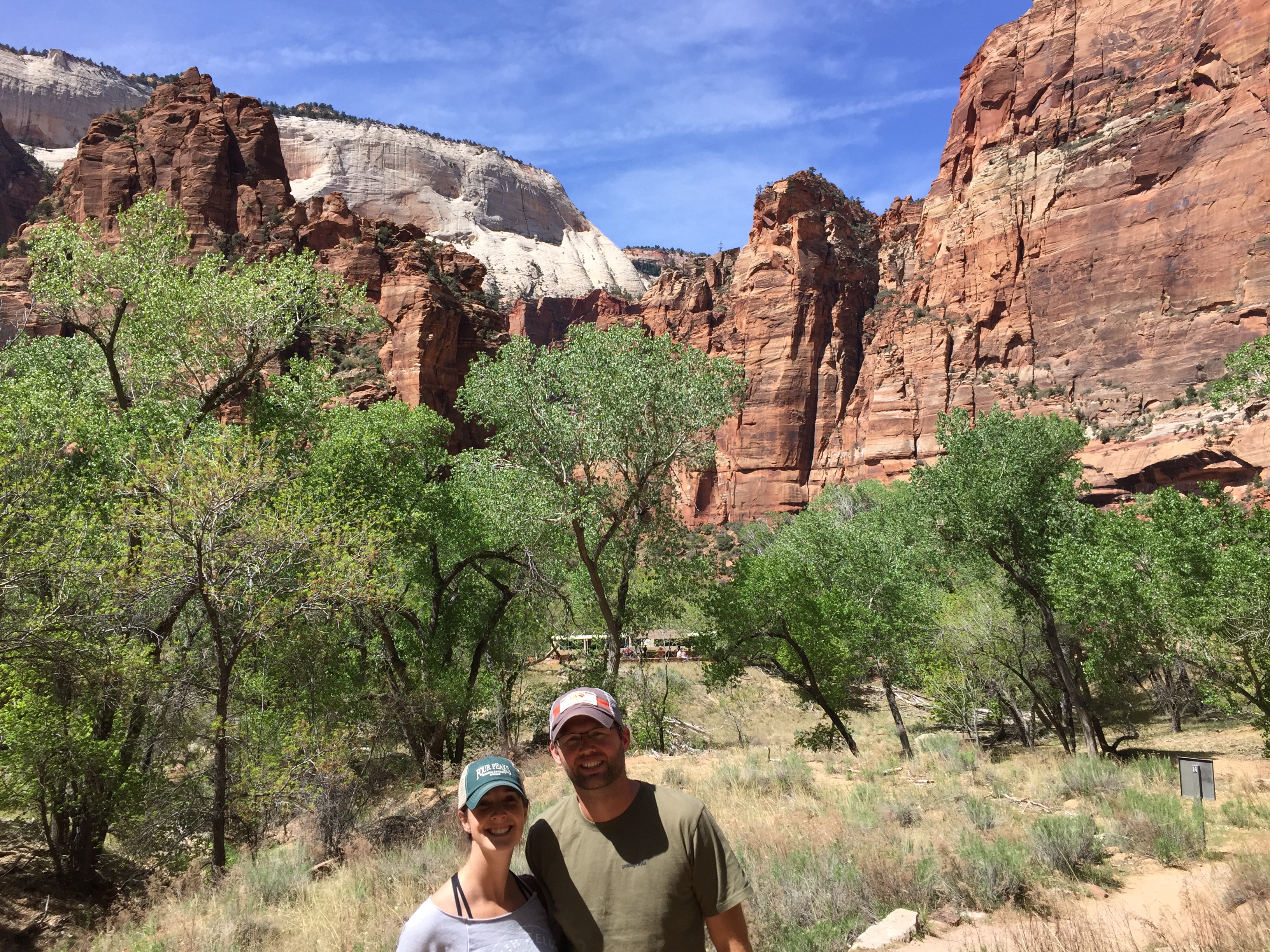
C and I left San Diego early Thursday morning and arrived in Springdale, Utah, around 2:30 p.m. We checked in at the Pioneer Lodge then went into Zion National Park for a while to do some exploring before heading to packet pick-up which was at the start line in Virgin. We didn’t hang around too long. My nerves were kicking in and I just wanted to get some dinner and get some rest. I knew the next day was going to be a long one.

Zion National Parl
C and I in the park the day before the race.
Zion 100
Zion 100 Course Map
Zion 100
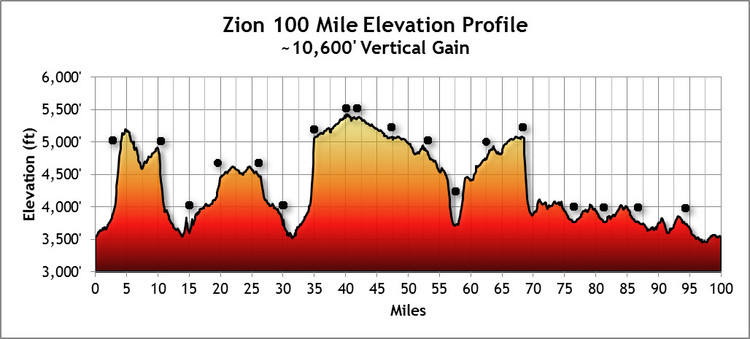
Zion 100 Elevation Map

Race day

There’s an energy at the start of a 100-miler that’s unlike anything I’ve ever seen, and the Zion 100 was no different. Both the 100-milers and 100K runners took off at 6 a.m., and just like that it was on. My second attempt at a 100-miler was underway.

As I approached the first big climb, Flying Monkey, the sun was just beginning to rise. I got up FM with no issues, hit the aid station up top and set out on the 6-mile loop atop the mesa.

The scenery up on top of the mesa was amazing – a completely different landscape than the land below. Oh, and the views from above were jaw-dropping.

Zion 100
Beautiful sunrise as we were going up Flying Monkey

I descended Flying Monkey with no issues and hit a nice stretch of Jeep road and was able to run most of it, before hopping on some single track and working my way to Dalton Wash Aid (mile 15).

C was anxiously waiting for me at Dalton. She knew that by now I’d know how the day was going to go. Once I got there she asked how I was doing – my response was simply “I made it to here.” I knew if I wanted to have ANY shot of staying in this thing, I had to focus exclusively on running from aid station to aid station.

After a quick pit stop I began the climb up to the Guacamole Loop, where runners would be treated to nearly 8 miles of challenging slick rock. It was impossible for me to get a rhythm going up there, so I just enjoyed the views and tried to keep moving as best I could. I finally made it off the mesa and back down to Dalton Aid 2.

Zion 100
View from the Guacamole Loop.

Once I got there, I noticed my pacer and good friend Tony from San Diego had arrived and immediately jumped in to help C out in crewing me. I wanted to take a few extra minutes to rest up – my hip already wasn’t feeling great and I wanted to recharge for a minute.

Neither of them let me, and before I knew it was back on the trail.

Going up

After crossing the highway I headed toward the infamous Gooseberry mesa. In my research of the race, I knew this climb was going to be a beast. The climb gains 1,500 feet. Fast. Sprinkle on some serious exposure to the sun and a subpar hip, and 1,500-foot climb felt like I was climbing Whitney.

Zion 100
Me coming up Goosberry. What. A. Climb.

Once up to the top I came into Goosebump Aid, refueled, and then set out on my last solo loop across more slickrock to Gooseberry Point and back to Goosebump #2. I got back a little before 8 p.m., but not before taking in one of the most amazing sunsets I’d ever seen.

Zion 100
Unreal sunset from atop Goosberry Mesa. One of my last photos before my phone died.

By this time I was only an hour ahead of the cutoffs. Definitely not where I wanted to be. I picked up my pacer, Tony, and we headed out into the darkness toward Grafton Mesa. Running with him was a huge breath of fresh air and though we weren’t moving fast, we were still moving. We arrived at Grafton Mesa, downed some soup and headed on through. Grafton was a breaking point for a lot of runners, many of whom were still sitting around waiting to get picked up.

I’d be lying if I said the thought of dropping didn’t cross my mind. I hurt from the start, I had yet to get into a rhythm, and now I was furiously chasing cutoffs … all with 45 more miles to go.

Before I could turn that thought into any more than just that (a thought), Tony said “You ready, G? We gotta go.” And just like that, we were back on the trail and off toward Cemetery Aid Station (mile 57.5).

After a mix of single track, slick rock, climbing, and then a huge descent off the mesa, we arrived at Cemetery Aid with 45 minutes to spare. After another quick in/out we were on our way back up. The climb up was the hardest and most challenging part of the day night for me (so far), but Tony did a fantastic job of keeping me moving.

This was also about the point in the race where I DNF’d in my 100-mile attempt last year (around mile 60). Tony knew this – and though we weren’t saying much at this point, he did say this:

“You’re about to be on the other side of what you know you’re capable of. It’s all new after this.”

In a weird way, hearing that gave me a spark that I hadn’t had most of the day. It was true; I was now further into a race than I’d ever been. What a rush.

The way back was a serious grind, and making cutoffs was still a top priority (talk about a feeling of added stress!). We were in and out of Grafton Mesa #2 within 5 minutes and got back to Goosebump Aid #3 by 4:45 a.m.

By this point all I could think about was how bad I wanted off the mesa. Upon leaving Goosebump I got my wish – in the form of a 1,500-foot, pitch-black descent down Gooseberry.

I’ll leave most of the details of it, but just know that I was in a dark place (both literally and figuratively) by this point.

A change of scenery

After getting off the mesa, we had to get to the Virgin Desert Aid station by 8:30 a.m. The stretch was tough, but we got there by 7:45 a.m. My hour buffer was fading.

Fast.

Once you hit Virgin Desert Aid, the style of the race changes. Runners were now faced with a series of challenging desert loops. In prepping for this race, I had thought that if I could just “get to Virgin Aid” that I could spend some time getting re-energized before hammering the loops out, but being up against cutoffs, I didn’t have that luxury.

C was waiting for me at Virgin Aid and would be responsible for pacing me out the rest of the way (25 miles). Tony had done a phenomenal job keeping me moving overnight, knowing that I was hurting and not in a good spot. He was able to keep me on pace, and focused just on the next aid station. It was a night I never thought would end – but, like all things, it did.

For the record, Tony wasn’t unaware of what was going on at all, either. He knew we were crunched for time, had a long way to go, and that I was starting to fall apart. (He had dug deep and finished the SD 100 last year, so he knew what it took to get to the finish – and what I had yet to go through).

The red, white, and blue

By now my mental state had gotten a lot worse, and I was seriously rationalizing a second DNF in my head.

“Well G, you made it 76.5, farther than you’d ever gone – but it’s just not going to be your day. You weren’t 100% when you started … and you’re paying for it now.”

This “inner monologue” slowly started to leave my head and now C and Tony were hearing it … but they weren’t having it. They both knew me well and weren’t ready to have a repeat of last year.

And just like that, they switched roles. C was ready to go and after 5 minutes we were out on the Red Loop, a 4.7 stretch of rolling desert single track … with a cutoff of 9:15 a.m.

A snail’s pace is probably an adequate comparison to what I was churning out at this point. I asked C every 3-5 minutes “how much distance have we covered? Do you think we’ll make the cutoff?”

C, being the ever-positive person she is, assured me we were doing great and that we could make it.

I apparently thought otherwise. I began walking, saying I had “given it my best effort, but it just wasn’t going to happen.” We came in at 9:10 a.m, the cutoff was 9:15 a.m – and I didn’t think I could go back out.

I thought it was 9:15 a.m.

An aid station worker who had taken notice of me when I first came into Virgin Desert Aid came over and said “Don’t get too comfortable buddy, the cutoff is 9:30 a.m. You have to get back out there. You’ve come this far. You’ve got to keep going.”

He took my red bracelet and replaced it with a white one, to signify I was about to start the second loop.

And again, just like that, we were off.

The white loop (mile 81), was a bit longer with more rolling hills … and it was getting hot. I was kicking out salt bad and knew I was on the verge of losing control of my nutrition, but we slugged it out. All thanks to C.

It gets a bit overwhelming when you start to think that you’re within 20-30 minutes of not being able to continue on, which is exactly where we were at when we returned from the white loop.

Mile 87.1

Time in/out: 11:10a.m./11:22 a.m.

Cutoff:            11:30 a.m

The same aid station worker that had kept me on course earlier found me again and offered me more words of encouragement and advice. His support, along with C and Tony’s was hitting me hard, but I was falling apart. I hadn’t stopped for more than 5-10 minutes since mile 47.5. My hip was on fire, my feet were all blistered, and my nutrition was in the tank. I was a mess.

Even with all the support I was ready for a DNF in my head. But my crew didn’t let me act on that thought and sent me back out. I had more than 3 hours to go 7 or so miles. But like I said, I had fallen apart. I was walking/shuffling along at a dismal pace, and things were looking bleak.

The blue loop was also the most exposed (and challenging) of the loops, and the sun was just roasting us. We had caught up with a few other people who were in the same boat, wished them well and continued to shuffle along.

Zion 100
A view from the blue loop

C did an unreal job pacing me, knowing just when to talk and when to let it ride. When to let me vent and when to tell me to man-up. It was a delicate balance and she managed it well.

In my head I thought that IF I could somehow get back to Virgin Aid for the last time by 1:30 p.m. that would give me 2.5 hours to finish, and at the pace I was moving at, I thought I MIGHT have a shot.

But 1:30 p.m. quickly passed, and I was still out there. I watched 1:45 and 2 p.m. tick by as well, before getting returning to Virgin Aid for the last time at 2:18 p.m.

Mile 94.

That was it. I came into that aid station to drop. I was dehydrated and distraught. I thought I had left it all out there and came up short. There was no way I could go 6 miles in less than 1 hour 45 minutes based on how I had been performing for the last 12 hours.

It wasn’t possible. Not to me.

I walked in and sat down, ready to make my announcement, but before I could, the aid station volunteer dumped an entire cooler of ice water over my head, and said “Hey buddy, you look like hell, I know you feel like hell – but YOU. CAN’T. STOP. YOU GO FINISH THIS THING! YOU’VE COME TOO FAR TO QUIT!”

His statement was matched with Tony handing me two new water bottles and C pulling me back out on the course.

This was it. We were going for it.

The ice bath was reinvigorating – and the support from my crew and the aid station worker helped stoke a fire deep within me. I was 94 miles in. I had 1 hour 35 minutes to give it everything I had.

And so I did.

For the first time since miles 10-20 I started running. As hard as I could. I’d tell C to “Go” and we’d run as hard as we could, walk and repeat. Tony had parked near mile 97 and was stressed to the max, he knew I had fallen apart and my pace was bad.

Until he saw C and I come around the corner. 3 miles down in 35 minutes. Some of the fastest miles of the day for me were miles 94-96. I had 3 miles to go – and more than an hour to get there.

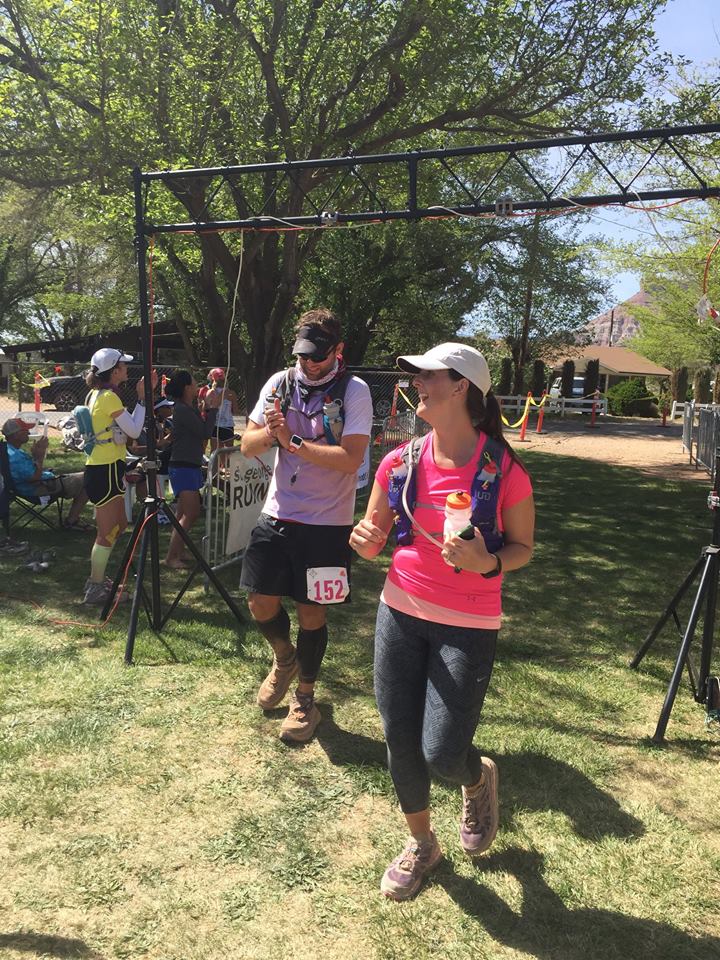
I gave the next few miles all I had as well, and came across the finish line in 33:25, side by side with C, Tony, and my friend Corina, who had hung around to watch me finish.

Zion 100
Finishing my first 100-miler
Zion 100
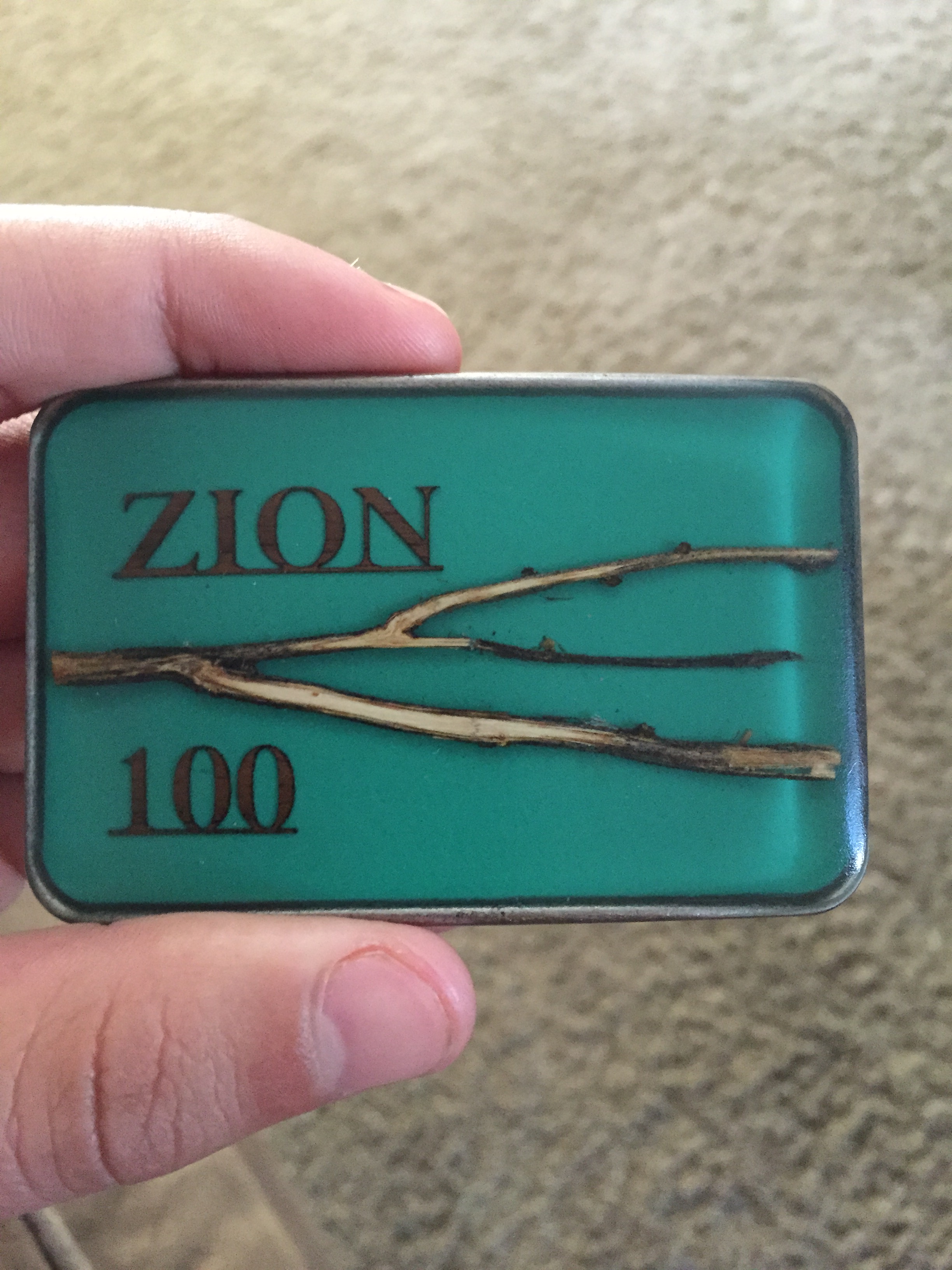
Handcrafted buckles were awarded to all finishers. After two years, I finally got mine.

I couldn’t have done it without the support of C, Tony, Corina, the aid station worker, and my fellow runners. It truly was a life-changing experience. I learned more about myself during this race than I ever thought possible, but most importantly, I learned to never give up – in running or in life.

Zion 100
The gang at the finish. I wouldn’t have finished without them.

Take care,

G

Monument Valley

Race Recap: The Monument Valley 50

It’s hard to believe it’s been two weeks since C and I road tripped to northeast Arizona for the Monument Valley 50. The weekend was amazing, and not just because of the race. In fact, even though we logged 24 hours in the car on a trip that lasted less than 60 hours total, we both agreed that we’d do it again in a heartbeat.

We took off from San Diego bright and early, at 3:30 a.m., and hit the road. This was total déjà vu for me, having done a similar middle-off-the-night departure to get to the Antelope Canyon 55K just a few weeks prior. But lucky for me this time I’d have company, both in the car and on the trails, as C was coming along to pace me for the last 15 miles of the race as training for her pacing duties at Zion.

As much as I enjoy road tripping alone, having C along for the ride was a complete blast. We made great time and were through Phoenix before either of us knew it. From there, we were northbound for a few hours, before heading through Flagstaff and on to Monument Valley.

We lucked out and snagged a last-minute cancellation at a hotel called The View just a few hundred feet from the race start/finish line. After checking in and dropping off our bags, we decided to make the most of the daylight we had left.

Monument Valley
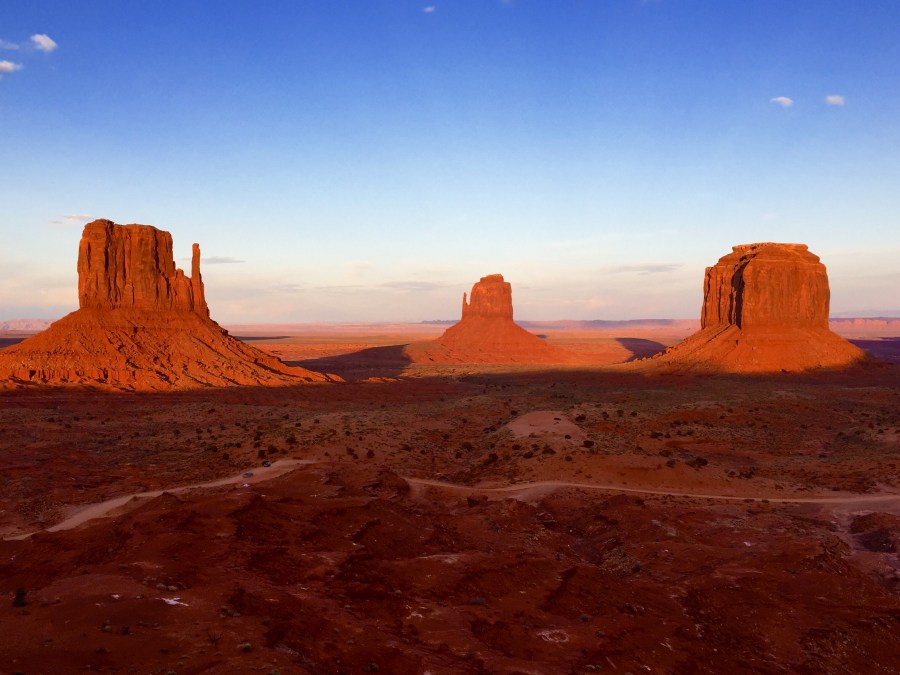
Monument Valley as the sun set the night before the race.
Monument Valley
“Well, I’m pretty tired. I think I’ll go home now.” Just kidding! I’ve got the Monument Valley 50-miler tomorrow!

After a nice meal at the hotel and an evening walk to take in the scenery and look at the stars, it was off to bed (except for when we got up and to look at the stars again at 3 a.m.).

Race Day

Monument Valley
Monument Valley 50-Mile Race Elevation Profile
Monument Valley
Monument Valley 50-Mile Course Map
Monument Valley
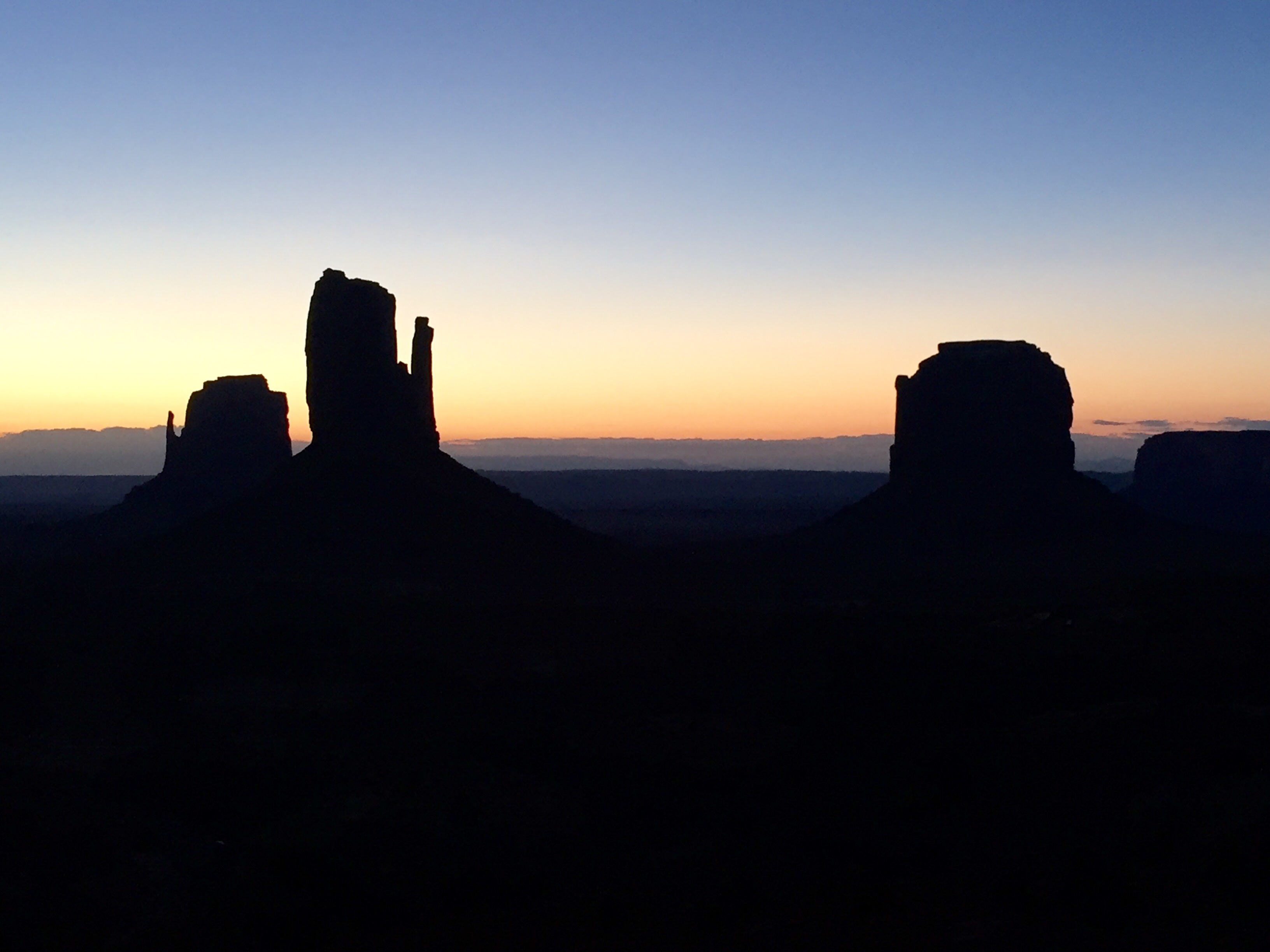
Sun rise at the start line

Prior to the 50M/50K start, runners were treated to a Navajo Prayer Ceremony at the start line and then, promptly at 7 a.m., were off on our way.

I thought that Running Antelope Canyon a few weeks prior had given me a pretty good idea of what to expect, but since the Monument Valley area had been hit by extreme weather during the past two weeks, I knew it was best to take anything I thought I knew about the course conditions, throw it out the window, and prepare for a long, tough, sandy day through the Navajo Nation.

Monument Valley
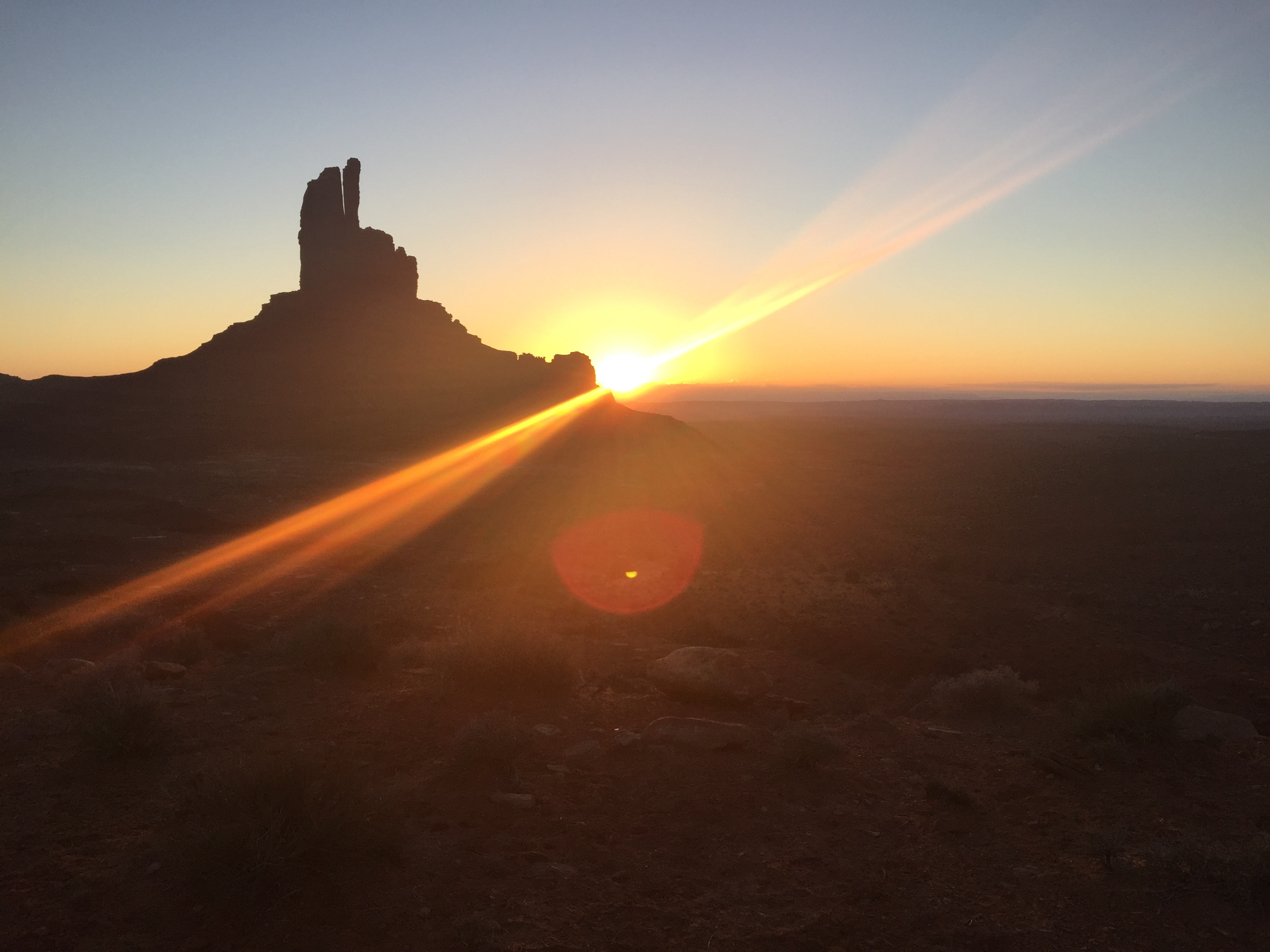
Sunrise somewhere near Mile 4

With less than 60, 50-mile runners, the pack thinned out fast, and runners were able to experience the area’s beauty on their own. As I trudged along through the sand, it quickly became apparent that I was going to get, way, WAY closer to the monuments than I had originally thought. By mile 9, I knew this was going to be one of my favorite races to date.

Monument Valley
Near Brigham’s Tomb
Monument Valley
Sandy conditions for miles

The weather that hit the area earlier had helped “pack down” some of the sand, but most of the miles between Brigham’s Tomb Aid (mile 9) and Hogan Aid (mile 22) were still a challenge. I hit Hogan’s Aid for the first time in around 5 hours, feeling pretty good overall.

From Hogan, the 50-milers would do a series of loops, all of which passed back through Hogan before heading onto the next. The first loop (North Windows) took runners out on some of my favorite singletrack of the day. The views were simply unbelievable.

Monument Valley
Running beneath the monument

After North Windows, I cruised came through Hogan before heading out on the Arches Loop. This 9.5 mile loop was incredible … and sandy. But mostly incredible.

Monument Valley
Is this the Sahara? No, it’s Monument Valley.
Monument Valley
Ear of the Wind

I returned to Hogan for the final time at 3 p.m. and picked up C, who was planning to run the final 15 miles with me. We headed off to Mitchell Mesa – which would be the biggest climb of the day at mile 40.

(Sidenote: To the group of volunteers at Hogan Aid, kudos on running such a great aid station. With runners hitting this aid station multiple times, I estimate they saw somewhere between 800-1,000 runners. Every time I came through food and support was plentiful and spirits were high. One of the best aid stations I’ve ever ran through. Thanks again – you all were great!)

Heading up Mitchell Mesa was tough. The trail up was really technical and slow going, but once we got to the top, the views we got where the highlight of my day. Words don’t even do it justice.

Monument Valley
The view from the top of Mitchell Mesa

At the same time I was up there, I noticed a local Navajo man up there … ON HIS HORSE. I couldn’t help but stop and ask how he got up there with that horse. He smiled and simply said “the same way you two did.”

Monument Valley
We weren’t the only ones on top of Mitchell Mesa …

I had a lot of interactions with the local Navajo throughout the day, each of which was an incredibly memorable (and positive) experience. Talking with them about their land, its beauty, and its history was a once in a lifetime experience that we all enjoyed.

Coming down Mitchell Mesa was a lot more fun than going up, and before I knew it C and I were back to Hogan Aid for the final time. Just 3.2 miles were left until the finish. I’d been out there a little more than 12 hours and was feeling pretty thrashed … yet I couldn’t wipe the grin off my face.

Having C out there as my pacer was fantastic. She did a great job keeping me moving and helping me forget about the pain. Definitely a natural!

Together, we knocked out the final 3 miles and crossed the finish line at 12:53:36 (30/41).

Monument Valley
50-mile race finishers received a bracelet handcrafted by a local Navajo family

The next morning, bright and early, we put about 700 more miles on my Altima before arriving back home in San Diego. Talk about a whirlwind trip!

One that neither of us would change for the world.

Take care,

G


Race Recap: Third Annual San Diego 50 and Trail Marathon

Hi there, We apologize for being so absent since the first of the year; January and February have been a blur for both of us. Wedding planning + an insane work schedule has left us both feeling pretty drained. But we’ve still been active!

The highlight of last month for us was running the Third Annual San Diego 50 and Trail Marathon through the San Dieguito River Park. G ran the 50-mile distance there last year (his first 50-miler), and was excited to see how much a year’s worth of training would pay off. C decided to take on her first trail marathon distance this year, and then find G at the Mile 40 aid station to cheer him on for the remainder of his race. Perfect plan!

We decided to carpool out to the start/finish line, and picked up our friend J on the way (he was running the 50-miler with G). After checking in and labeling their drop bags for the Mile 20/30 aid station, G and J took off at 6:30 a.m. for their race. That left me with an hour to pin on my bib, eat a bit more and psych myself up. I had never run the course before, so I had no clue what to expect other than quite the climb at Mile 5-6.

The marathon group took off at 7:30 a.m., and honestly the first 4.5 miles were lovely. It was a partly cloudy and in the mid-40s temperature wise, which is my ideal race start weather. We wound our way around the edges of several farms and began to make our way to the start of the climb up Raptor Ridge. While the climb up Raptor Ridge was strenuous, I enjoyed the challenge and kept pushing until I was able to fly down the backside to the Mile 5.7 aid station.

San Diego 50 and Trail Marathon
The view as I was climbing Raptor Ridge.

Raptor Ridge to Sunset Park (5.7 – 10)

I’ll be honest and say that this stretch of the course got a little boring for me, but I contribute that being so spread out from other runners (very common in trail races, but very new for me) and not having headphones to listen to music. I did, however, see a fox cross the path around Mile 7 and that helped to break up this portion of the race. It also started to get warm as the clouds went away; I kept telling myself that G was out there running twice the distance I was. Basically, suck it up, buttercup. At the Sunset Park aid station I ate a few potato chips, had some soda, and a handful of pretzels, and got back on course.

Sunset Park to the Marina turnaround (10 – 13.1)

Things got a little more scenic once we crossed under Interstate 15 and began to run along the trail overlooking Lake Hodges. The mid-section of this part was fairly rocky and I was so glad G had encouraged me to wear my Hokas for more cushioning. I hit the turnaround in 2:52 and really felt strong despite the direct heat from the sun. I ate a couple of vanilla wafers with Nutella, pretzels, and a quarter of an orange. I refilled my hydration pack with water and started back toward the finish.

Marina turnaround to Sunset Park (13.1 – 16.2)

I ran most of this section with a nice gal in her mid-20s. It was her first trail marathon, too, and we talked about significant others, our dogs, and how hungry we were. Overall, it was good part of the course with the views of Lake Hodges and knowing that the next aid station wasn’t too far away. Once there, I ate half of a peanut butter and jelly sandwich, drank some soda, and took off toward the base of Raptor Ridge (did I mention we have to go back over it?).

Sunset Park – Raptor Ridge (16.2 – 20.5)

I was kind of dreading this portion again (because I felt so lonely the first time around). A few women on horseback passed me and offered to just take me on to the finish with them. It was definitely tempting, but I just kept running. This was, by far, the hottest part of the course and I noticed my fingers were starting the swell. I knew from crewing G that when that happens that means there is an electrolyte imbalance, but I couldn’t remember in which direction: did I need more salt or more water? I rolled into the aid station and was happy to see our friend T volunteering. I asked him about my swollen fingers and he gave me 2 salt tabs and said I should be fine with less than 6 miles left.

Raptor Ridge – Finish (20.5 – 26.2)

My first time over Raptor Ridge was challenging, but fun. I was humbled by the second trip over it. The backside is a very steep single-track trail to the top, whereas the front side had been wider with a more gradual gain. About halfway up, the guy who would be named the winner of the 50-miler passed me. You guys, he was moving and running the entire way. I was in more of a power hike mode at this point, and had no intention of trying to catch up with him. Running back down Raptor Ridge was actually a lot of fun, and then I made my way back around the edges of the farms and crossed the finish line in 6:36.

San Diego 50 and Trail Marathon
C coming into the finish at the end of the trail marathon.

G’s second running of the 50-mile race

What can I say? I love this race! Over the past year it has become a staple in my training. It’s scenic, close, and provides a little bit of everything in terms of terrain.

That said I hadn’t been able to train regularly on the course for quite some time. Ever since fall of last year, I’d been dealing with a foot injury that completely derailed the latter half of 2014 for me.

However, starting in late November, I slowly started putting in miles again – which included a nice and easy run at CIM Marathon, several back to back long runs, and weekly mileage that climbed its way back into the mid 30’s. While I wasn’t in peak shape – I was definitely getting back on track, albeit slowly.

The goal for the SD50 was to improve over last year’s SD50 race and use it as a benchmark of where I was at physically/mentally going into the 2015 race season.

I’ll spare you the turn by turn details (see last year’s post), but know that once again the course was beautiful, well-marked and well-supported. In fact, this year’s race was even more enjoyable for me than last year’s because I was able to run with so many friends I’d met over the last year at various San Diego races.

San Diego 50 and Trail Marathon
C was able to double back to cheer G on at the 40-mile aid station.

I finished the race in 11:35 – a 1 hour and 21 minute PR for me at the 50-mile distance. Though my pre-race mileage wasn’t where I wanted it to be, I attribute the strong finish to three things:

  • Being on top of hydration & fueling (this was where I crumbled last year)
  • Consistent pacing throughout the entire race
  • Course familiarity (I run this area a lot)

The race was a good one for me. My best ultra so far, actually, and was a real confidence booster looking toward what’s coming up in 2015.

The thing I loved most about this run was that it provided me an opportunity to reflect on how much I’d learned about the sport – and myself – over the last year, and how big a part of my life trail running has become.

Since the SD50 I’ve been quietly ramping up my mileage, incorporating new workouts, and refining my approach to nutrition and hydration – both while running, and in day-to-day life.

San Diego 50 and Trail Marathon
G’s best 50-mile finish: a 1 hour and 21 minute PR!

That said, my 2015 race season is officially underway, and next up is Ultra Adventures Antelope Canyon 55K this weekend.

One thing is certain: It feels so good to be back.

I can’t wait to see how things progress from here.

Take care,

GnC

Race Recap: The San Diego 100-Mile Endurance Run—My First DNF

It’s been more than three weeks since my first DNF at mile 64 of the San Diego 100-Mile Endurance Run.  In that time I’ve replayed the race a hundred times in my head, analyzed the highs and lows, and have come to the following conclusion: I needed that. But I’ll explain what I mean by that later. Here’s the recap:

C and I picked up my buddy Mark—who was also running—and headed out to the pre-race meeting at Lake Cuyamaca. Once we got out there I saw several other people whom I had trained with and had the chance to chat and check in with them all. Race Director Scott Mills gave a great pre-race briefing, and then it was off to our hotel for the night in Julian.

SD100
The pre-race briefing

I slept surprisingly well and was up by 3:45 a.m. getting ready and at the start line by 5. The next hour was the worst. I just wanted to start running!

SD100 At 6 am sharp, I got my wish and 222 runners took off from the start.

Lake Cuyamaca – Paso Picacho 1 (0 – 6.8)

The first section had about 1,300’ of gain so I took it easy, settled in and climbed. My strategy for the day would be simple: walk the ups, jog the flats, and run the downs.

Paso Picacho 1 – Chambers 1 (6.8 – 12.5)

After a brief pitstop, it was time to head up and over Stonewall Peak. By now, runners had spread out a bit more, which was nice. Before I knew it, I was up and over Stonewall and running through the fields nearby, still feeling great.

SD100
View from the stop of Stonewall Peak

Chambers 1 – Pedro Fages (12.5 – 18.5)

I checked in and out of Chambers in less than 5 minutes and continued on my way. Not a lot to report on this section other than some beautiful singletrack.

SD100
Heading into Anza Borrego

Pedro Fages – Sunrise 1 (18.5 – 23.2)

I got into Pedro Fages and was ahead of the cutoffs by and hour. I was feeling good and was managing my nutrition and hydration pretty well, too. The next stretch left the runners pretty exposed, and as the day wore on, it quickly became apparent that the “heat” was wearing runners down.

I say “heat” because, while it didn’t necessarily feel hot out there, there was nothing protecting the runners from that sun! Staying on top of electrolytes and hydration became paramount. Before I knew it I was rolling into the Sunrise 1 and was incredibly excited to see Christina there (Sunrise was the first spot for crew access).

SD100
Coming into Sunrise 1

Sunrise 1 – Pioneer Mail 1 (23.2 – 30.4)

After talking with C and Jessica (my buddy Mark’s girlfriend), I was out of there and back on my way. Oh, and the views got better, too.

SD100
Great view from the Laguna Mountains

Pioneer Mail 1—Penny Pines 1 (30.4 – 34.4)

Felt great here and actually started getting some time in the bank, which felt great.

Penny Pines 1 – Todd’s Cabin (34.4 – 39.6)

Nothing much to report here.

Todd’s Cabin – Red Tail Roost (39.6 – 44.7)

I had run this area on several training runs (as well as during the PCT 50), so knowing what was just ahead was helpful. I’d caught up to several other runners I’d trained with in the months prior and we ran it in towards Red Tail Roost.

SD100
The last photo before my phone died

Red Tail Roost – Meadows (44.7 – 51.1)

As I came into Red Tail Roost, I was still feeling good – but was hungry. I knew I’d been on the move all day (in and out of aid stations in less than 5-7 minutes) and hadn’t rested much at all, due to skirting some of the cutoffs. I decided to sit, and have some real food before heading out and picking up my pacer at Meadows.

Boy, things did NOT work out like that.

I left Red Tail Roost feeling good, but didn’t get more than a half-mile out when I got an unbelievably intense sharp pain in the bottom of my forefoot. Sharp enough to stop me in my tracks. Now, I’ve had blisters, and “sore” feet, but this was unlike anything I’d ever felt.

I stopped and started walking, noticing that if I kept my weight off my forefoot I could at least keep moving. So, move along I did … all the way into Meadows, but my running had been replaced with a slow walk.

Meadows – Penny Pines 2 (51.1 – 56.3)

It was dark by now, and the last section had cost me dearly in regards to time. I was back to less than an hour to hit the cutoffs. Not a place I wanted to be with a bum foot.

I picked up my pacer, Paul, who was gracious enough to offer to pace me on my first 100. At this point I felt like I owed it to him to keep going. He had been out there for a few hours and I wanted to desperately believe that this pain would subside and I’d be able to keep going. I modified my stride and incorporated a walk/run and somehow managed to get to Penny Pines 2.

Penny Pines 2 – Pine Creek (56.3 – 64)

We got to Penny Pines 2, and Paul could tell that I was hurting pretty bad. I’d dropped pretty far behind him and couldn’t shuffle along for much more than 20-30 yards without having to stop.

To say I was thinking clearly at this point is probably inaccurate, but aside from the physical pain, I was mentally and nutritionally still very much in this race and wanted to believe that I could keep going. I left Penny Pines with Paul and was still somehow managing to make forward progress, even though we were predominately walking by this point.

Then, it happened. My foot literally “gave out” and I couldn’t put any more pressure on it. Zero. And I knew right there … I’d be getting my first DNF in the San Diego 100.

After a brief mini blow up of emotions—frustration, anger, sadness, etc.—I pulled myself together and slowly (read: very, very, VERY slowly & with the help of Paul) made it to the next aid station, where I turned in my bib (I’d missed the cut off by 20 minutes).

My first attempt at 100-miler would end at Mile 64, Pine Creek, after 19 ½ hours on my feet.

-3 Weeks Later-

If my recap seems a bit blurry compared to ones in the past it’s because it is. The past three weeks have been full of me replaying the race in my head, asking myself tons of questions about what I could have done differently, and self-diagnosing myself through research. At first I was determined to find out what went wrong.

  • Was I undertrained?
  • Had I not tapered properly?
  • Was running in minimalist-style shoes a bad idea for me?
  • Did running the PCT 50 just four weeks prior set me up for an overuse injury?

The questions went on and on, which is one of the reasons it took so long for me to write this post.

After three weeks, and a lot of questions, I believe I have the answer and–regardless of what happened out there—my reasoning for not finishing was much simpler than I wanted to believe.

It just simply wasn’t my day.

Once I was able to accept that, I was able to move on and begin again. Which is exactly what I did yesterday, as I went out on my first run since the race. Time to start looking forward and stop dwelling on the past. That’s what it’s all about, right? Relentless Forward Progress.

Man, I needed that.

Race Recap: PCT 50 Mile Ultramarathon

I signed up for the PCT 50 as soon as it opened back in January … and it was a good thing I did. The race sold out in just a few days! After doing some research and spending some time out on the trail itself, it was quick to understand why: The Pacific Crest Trail is absolutely beautiful.

The race was ran primarily on single track trail in the Cleveland National Forest, and provided unbelievable views at altitudes ranging from 3,000-6,000 feet. The race also boasted 7,500 feet of elevation gain. Needless to say, today would not have been the day to forget my race pack!

With the race start being about an hour east of San Diego, we got up at 3 a.m., picked up my buddy Mark, and headed out. We got to the start (Boulder Oaks Campground) about 5:15 a.m., just in time to pick up our packets, say hello to some running friends, and get those last few pre-race jitters out. And then—before I knew it—I heard “3 … 2 … 1!”

We were off.

PCT 50
Runners preparing to go at the start

Boulder Oaks Campground – Fred Canyon Road (0.0 – 6.4)

The race wasted no time in sending us “up”. My strategy for the first part of the race was simple: fall towards the back and power-hike the first 14 miles, since they were mainly uphill. I ran the flats and downs but wanted to conserve as much energy as I could, which made this stretch pretty uneventful.

PCT 50
A.M. reflection on the PCT

Fred Canyon Road – Dale’s (6.4 – 13.7)

I arrived at Fred Canyon aid station with no trouble. I topped off my bottles (one with water, one mixed with lemon-lime First Endurance EFS & Carbo Pro), grabbed some pretzels and an orange, and took off to continue my climb. The trail got a lot more technical during this stretch, which meant I spent a lot of time looking at the ground instead of the scenery, but before I knew it was rolling into Dale’s aid station.

PCT 50
Climbing on the PCT

 Dale’s – Todd’s Cabin (13.7 – 17.5)

After a quick pit stop, I was back on the trail and on my way. I knew the next few miles were predominately flat, so my plan was to hammer them out as quickly as I could. This stretch was mainly shaded single track, so it was the ideal place to bank some quick miles while getting a break from the sun.

PCT 50
Solitude out on the PCT

Todd’s Cabin – Penny Pines 1 (17.5 – 22.7)

I cruised into Todd’s cabin, quickly remembering how much tougher it is to run at elevation than it is at sea level (where we live). Luckily, I had run the next 5 miles on a previous training run, so I knew when to conserve/when to push. The scenery was crazy. Apparently, several years prior, the area had experienced a massive fire that scorched the earth. It felt like you were running on a different planet at times. I started hiking up the last big climb to Penny Pines and could see C at the top waiting for me. What a great sight that was!

(Sidenote: C, and all the volunteers, crewers, pacers, medics and sweepers who donate their time and energy to helping make the runners’ day successful deserve the biggest, most sincere THANK YOU I could possibly offer. You guys/girls are simply amazing. Thank you.)

PCT 50
View from up top

Penny Pines 1 – Turnaround (22.7 – 25)

As soon as I got to Penny Pines, C went to work getting my bottles filled and making sure I had everything I’d need. My pacer, John, had also just shown up and was preparing to run the last 25 miles with me. I was talking with them when I overheard someone say “cutoff time.” I froze. It was 11:40, and all runners would need to be back through Penny Pines by 1:30. John looked at me … I looked at C … we all looked at each other, and I busted ass back out onto the trail.

PCT 50
Grabbing some fuel at Penny Pines

Note to self: pay more attention to cutoff times!

Turnaround – Penny Pines 2 (25 – 27.3)

I couldn’t believe I could have been so careless. Although hiking the uphill at the beginning was allowing for some pretty fresh legs here – my back was now against the wall and I was going to have to work hard to stay ahead of the cutoffs on my return. Luckily this section was pretty much rolling single track and I was able to cruise pretty quick back into Penny Pines.

Penny Pines 2 – Todd’s Cabin (27.3 – 32.5)

I came back through Penny Pines, picked up John, and we were off – ahead of the cutoff by about 40 minutes. We started on our way back and were making pretty good time, passing several runners along the way. Although it wasn’t hot, per se, this section of the PCT left you pretty exposed, and I could tell the sun was starting to hit me pretty hard. However, the spectacular views of the Anza Borrego Desert nearly 5,500 feet below made the trip pretty enjoyable. As great as the views were, I’d be lying if I said I wasn’t checking my watch continuously … the cutoff at Todd’s was 2:30.

PCT 50
On the way to Todd’s Cabin

 Todd’s Cabin – Dale’s (32.5 – 36.3)

John pushed me pretty hard on the return and got me in (and out!) of Todd’s Cabin by 2:15. The return stretch here was pretty rough for me, as I could feel two hot spots on my feet starting to flare up. This resulted in some sort of walk-run-shuffle-tiptoe-forward motion that somehow got me to Dale’s.

PCT 50
Heading to Dale’s

Dale’s – Fred Canyon Road (36.3 – 43.6)

There was no cut off here, but they informed us that there would be a final cutoff at Fred Canyon at 5:30 p.m. Needless to say, we grabbed what we could and took off. While I’m not a huge proponent of out-and-back courses, I will say that it was nice to know exactly what type of terrain I had to run over to get back to Fred Canyon in time.

Fred Canyon Road – Finish (43.6 – 50)

I made it to Fred Canyon by 4:55, and saw my friend Mark there getting ready to head back out. We all ran together for the first few miles, then we split up. My return to the finish was FAST! Probably some of the quickest miles of the day for me – all over some pretty technical and rocky trail. As we descended the final few switchbacks, I couldn’t help but smile. My strategy had worked!

PCT 50
PCT 50: Complete

I crossed the finish in 12:32:32—a 17-minute PR at the 50-mile distance—on the most difficult course I’ve run to date.

Overall, I’m incredibly happy with how the day went. It’s funny, as with any race, I learned so much that will be valuable for future races. Although I was feeling a bit stressed on the start of my return, I do not regret my decision to power hike the start. Yes, I lost a decent amount of time there, but it resulted in an incredibly strong finish, with enough in the tank to keep going if I needed to. In conclusion: Physically, mentally and nutritionally, things clicked.

Thoughts Looking Forward

As many of you may, or may not, know, I’m running the San Diego 100 Endurance Run on June 7. The PCT 50 was my last long run before that race. If you’ve followed along, I’m sure you’ve noticed my last few tune up races have had all kinds of issues, leaving me feeling a bit uneasy. Yesterday’s race, however, erased all of that and provided me with the confidence I needed to be able to toe the line on June 7.

Take care,

-G

Race Recap: Old West Trails 50K Ultramarathon

With a lot of big races coming up— and very few miles on my legs—I decided I needed to do something drastic to get me jumpstarted in the right direction again. So, a week before registration ended, I decided to throw my hat in the ring and run the inaugural Old West Trails 50K yesterday.

The race contains roughly 2,500 feet of elevation gain/loss

Luckily the race was only about 70 miles away, so we were able to get up at the reasonable time of 3:30 a.m. and head to the start, which was at the Stagecoach Trails RV Resort & Campground near Julian. When we pulled in, we noticed that a lot of people had camped out the night prior and were starting to crawl out of the tents and RVs to get ready for the day’s fun. We parked and I went into the mess hall to grab my packet and then started getting ready myself.

A beautiful start to the morning

 At 7:00 a.m. all the 50K’ers took off into the desert for what was sure to be a hot, fun day!

And we’re off!
And we’re off!

 The first five miles of the course were relatively flat, with beautiful views of the Borrego Desert surrounding you on all sides. The runners seemed to “fall in line” and just enjoy the views on the singletrack trail before we started our descent into Plum Canyon.

View from the highest point of the course (2,700 feet).

After a quick descent through Plum Canyon we reached the first aid station. To my surprise they had a portable porta-potty (yes, you read that right – it was on a little trailer), which made me a very happy runner. C had gone off-roading in her Jeep (she’s getting really good at that) so seeing her was a huge boost to me mentally.

Knowing that I was using this race largely as a training run, I decided to fuel up, take it easy, and hike it out of Plum Canyon. Once out of the canyon, we followed the course back the way we came until it was time to hook with up the 30K course to finish out the run.

By this point in time it. was. getting. hot. The water drop at mile 13.1 offered an ice bucket with a cold sponge, which felt absolutely AMAZING. Shortly after this, the singletrack we’d been running on turned into a sand-based trail, which was a real treat. But before I knew it, I was coming into the aid station at mile 15, and not a second too soon. Both handhelds and my bladder were empty. The heat was really starting to make itself known now.

Coming into the aid station at mile 15

I wasn’t feeling too hot coming out of here so more walking was in my future – but there were no complaints coming from me. The scenery of Anza Borrego is absolutely beautiful.

Fireroad just outside the aid station at mile 15

 I doubled-down on my electrolyte consumption and continued plugging away until I hit the water drop at mile 19. While I started feeling better physically, my legs were starting to hurt (see: lack of training). I fueled up on some chips, cookies, HEED and pretzels and hit the road again.

From 19-22 were probably the longest miles of the day. The best way I can describe seeing the aid station at mile 22 was that it appeared as an oasis, but a really, REALLY far away one. Kind of like a hotel a few buildings down on the Las Vegas strip. Anyways, after running with a nice guy named Jim for a bit, we finally got there.

I immediately went for a potato with salt, chips and (more) cookies. C was here and was having a great time chatting and helping out other runners. I think she had as much fun as I did!

The oasis IS real! Coming into the aid station at mile 22

Once I left the aid station I took my time getting back, stopping to walk when I wanted needed to.  I cruised through the water drop at mile 25 and continued chipping away at the miles, because, sometimes, that’s all it’s about … chipping away. So that’s what I did.

Heading into the aid station at mile 28

Coming down into the aid station at mile 28, I was starting to feel rejuvenated. Now, if it was because there was an aid station in front of me, only 3 miles to go, or a downhill, I’m not exactly sure. But after a quick top off of my handhelds, and a shot of Mountain Dew, I was outta there!

The final few miles back were some of the most enjoyable of the day. I thought back on all of all the mental highs and lows that I had hit throughout the day – and believe me, there were a lot. That’s one of my favorite parts about running ultras; the mentality that they require to finish.

Before I knew it, I was crossing the finish line of my third ultramarathon – something that, just a year ago, wasn’t even something I was considering.

Crossing the finish in 7:44

Most importantly, finishing this race gave me the spark I needed to get back in the saddle and resume training for some big, big goals that I have set for myself yet this year. It also reminded me that sometimes a good, long run needs to happen for the soul, more than anything else.

Take care,

G

My First 50-mile Ultramarathon: The San Diego 50

Last Saturday I ran my first 50-mile ultramarathon: The San Diego 50. I had committed to running this race last September, and I’m so glad I did … because it changed me for the better.

Race morning

My alarm went off at 3:30 a.m. and after a relatively decent night’s sleep, I rolled out of bed, had my obligatory cup of coffee and tried to wrap my head around what I was about to do. Then I ate some breakfast (bagel & eggs) and started getting ready for race day. By 4:30 a.m., me and John – one of the guys I had trained with – were on our way out to Escondido. We met Carlos – another guy I trained with – at mile 10, where he dropped off his car, and then it was off to the start.

It was still dark when we pulled into the San Pasqual Valley Trailhead parking lot. The lot was full of runners staying warm in their cars, so we did the same until it was time to head to the start. After a brief speech from race director Paul Jesse, roughly 150 of us headed off onto the trail for what was sure to be a long, long day.

25-mile out and back course, 5,588 feet of climbing
Runners at the start

 Start to Raptor Ridge 1 (0.0 – 5.7)

The start was cold, probably somewhere in the 30s. The first part of the course was predominantly flat, which allowed for runners to easily “find their pace” and settle in. For me, that was towards the back of the pack. Part of my race strategy – since this was my first race at this distance – was to walk the uphills and conserve as much energy as I could.

Once I hit the base of Raptor Ridge, I walked it up, and then ran it down on the other side, straight through the first aid station. All things considered, I was feeling great.

Raptor Ridge 1 to Sunset 1 (5.7 – 10)

Things started to warm up a bit, as the sun started to make its appearance for the day. This stretch was pretty flat, so I just settled into my pace and enjoyed the miles. At about 8:30 I rolled into Sunset 1, where C was waiting. I ditched my fleece, thanked her for coming out (she spent all day cheering on runners from all the aid stations – what a trooper!), ate some oranges and bananas, downed some electrolytes and headed back out.

Sunset 1 to Del Dios Park 1 (10 – 15)

This is where running the whole trail “out” on a training run really paid off. Because of that, I was actually looking forward to this section of the course. The relatively flat, smooth trail overlooks Lake Hodges and the views are breathtaking. However, it wasn’t all sunshine and rainbows, as I quickly realized I was running out of water and was only 2 miles into this stretch – I was so excited that I had forgot to fill my Nathan hydration pack at either of the previous aid stations. Whoops.

My favorite stretch of the trail (Miles 10 – 15)

 Del Dios Park 1 – Bing Crosby 1 (15 – 20.25)

By now it was getting pretty warm; luckily these miles provided a slow, steady decline, right into the next aid station. During this stretch, I ran into a lady named Jerry who was also running her first 50-miler. We chatted about how our races were going, why we were running, etc. If there’s one thing I’ve learned it’s that the runners and volunteers – and the trail running community in general – are some of the nicest, down-to-earth people I’ve ever met. I felt privileged to be a part of it. Before I knew it Jerry and I were rolling into Bing Crosby 1.

Bing Crosby 1 – Turnaround (20.25 – 25)

As I left Bing Crosby 1 and headed out to the turn around, I could tell the heat was really starting to get to me. Though I’d been taking in electrolytes every hour and eating 3 Cliff Blok Shots every 30 minutes, as well as eating at every aid station and drinking as much water as I could handle, I could tell that it wasn’t enough. I simply wasn’t getting enough calories, which made for a very, very, tough next 8-10 miles.

I slowed dramatically and ultimately ended up walking a lot of this section. Once I hit the top of the switchbacks and started the descent on the other side I ran into Carlos, who was on his way back and looking strong. It was great to see someone you’d trained with killing it – and it gave me just the push I needed to keep moving forward.

As I approached the turnaround, I ran into my other training partner, John, who was also on his way back. We chatted for a minute and then both went our separate ways, leaving me feeling completely re-energized.

It’s a bird! It’s a plane! No, it’s the turnaround!

Turnaround – Bing Crosby 2 (25 – 29.75)

After leaving the turnaround, I settled in mentally for what I knew would be one of the toughest parts of the course (for me). While I’m not sure what it is, that stretch from Bing Crosby 1 to the turnaround (and back) is mentally crushing for me. It had been in all our training runs, too. However, KNOWING this going into race day helped substantially.

Once I got to Bing Crosby 2, I changed socks, sat down and ate a bagel with some peanut butter. Unfortunately, I think it was too little, too late.

Coming into Bing Crosby 2

Bing Crosby 2 – Del Dios Park 2 (29.75 – 35)

KABOOM! I’ve heard a lot of people talk about “blowing up” during a race. Well, this stretch is where I spontaneously combusted. I walked almost all of it. Looking back on it, this was due to a combination of things: the heat, nowhere near enough calories and probably not enough electrolytes, either. At the time I was bummed that I had to walk the majority of this stretch, but after a few days to reflect on it, I’m glad it happened. I was able to pinpoint what went wrong, experience a true “blow up” and, most importantly, keep pushing forward.

Beautiful trail leading into Del Dios aid station

Del Dios Park 2 – Sunset 2 (35 – 40)

Hallelujah, he has risen! After taking some time to “put myself back together” at Del Dios 2, I felt much better. These were some of my strongest miles since the start and It. Felt. Great! It didn’t hurt that this was my favorite section of the course, either. As the afternoon was winding down (it was about 4), it made for some beautiful views of the lake, and allowed me to really get in my head and reflect on so many things. It may sound a bit strange, but it was a very profound 5 miles for me.

Sunset 2 – Raptor Ridge 2 (40 – 44.3)

As the sun began its descent, I took off from Sunset 2. Christina could tell I looked a lot better, but was still banged up from the fact that I’d been running for 10 ½ hours. By this point, there was NO ONE else around, just me, my thoughts and the few miles ahead that lead to Raptor Ridge 2. I arrived there with 10 minutes to spare (they were beginning to pack up). It was a little before 6 p.m. I had 90 minutes to get back to the start, something that sounds a lot easier in theory, than after 44.3 miles. The sun was now gone and it was dark. I put on my headlamp, and headed out to start the ascent of Raptor Ridge.

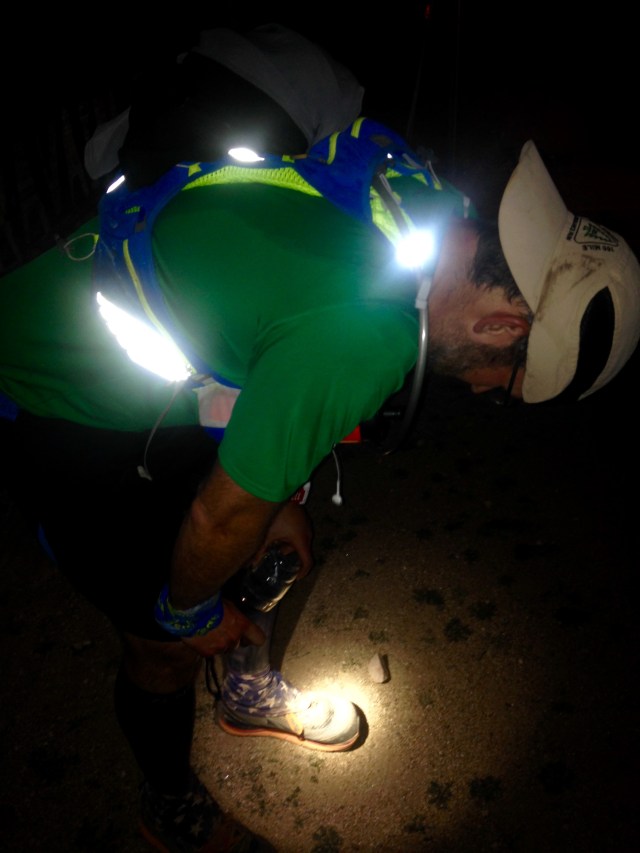
My headlamp sure came in handy on Raptor Ridge

Raptor Ridge 2 – Finish (44.3 – 50)

Climbing Raptor Ridge by the light of my headlamp was surreal. It was at that moment that I really knew I’d found something new that I loved (trail running). Though the last 5 miles were incredibly, incredibly long, I didn’t mind. I was in my own world, and I loved it. However, before I knew it, I heard a few faint cheers coming from the finish line. I couldn’t believe it – I was almost there!

Finish

I crossed the finish in 12 hours and 47 minutes, helping me hit my “C” goal (I had set 3 goals for the day: A) < 11 hours, B) < 12 hours & C) to finish). As I watched my A & B goals go up in flames, I knew I still had a shot at my C goal – and I got it.

50-mile ultramarathon finisher
50-mile ultramarathon finisher  

Carlos had an incredibly strong finish and John got in just a few minutes before me. I was incredibly proud of all of us – and thankful that I had the opportunity to train and run with such great guys in the months leading up to the race.

To say that this recap does this experience justice would be incorrect. This is just all I can remember. For most of the day, I was in my head like never before – and I loved it. I was tested both physically and mentally and came out a better person because of it. This experience was so much more than just a run.

I’ve taken the last few days off, but now it’s time to get busy and focus on hitting my “A” goal (<11 hours) at the PCT 50-miler in May.

-G